Choosing the best Lathe for 2026 requires more than comparing spindle speed, swing, or catalogue price. Global buyers now face tighter delivery schedules, skilled-labour shortages, energy concerns, and rapidly changing production volumes. A machine that looks impressive on a showroom floor may struggle with vibration, chip control, or service support after installation. That detail matters.
Industry data shows why this market deserves careful examination. The International Federation of Robotics reported 541,302 industrial robots installed worldwide in 2023, confirming the broader shift toward automated production. AMT’s U.S. Manufacturing Technology Series also tracks continuing investment in machine tools, although monthly demand can change sharply by sector. Grand View Research’s machine-tool analysis identifies automation, precision manufacturing, and digital connectivity as major growth drivers. These reports do not rank every Lathe model. They provide useful direction, not a final buying decision.
Peter Zelinski, a long-time machine-tool industry editor, has said, “A machine tool is a production system, not merely a piece of equipment.” That principle guides this 2026 review. We examine turning accuracy, control systems, thermal stability, tooling flexibility, maintenance access, training needs, and worldwide parts availability. We also consider real workshop conditions: a dusty factory floor, a six-hour shift, and an operator waiting for replacement bearings. Not every machine will suit every buyer. That is the uncomfortable truth. Specifications can mislead. Service history matters more than glossy promises. This guide compares leading Lathe machines for automotive, aerospace, job-shop, and general industrial users, while leaving room for practical doubt and informed reconsideration.
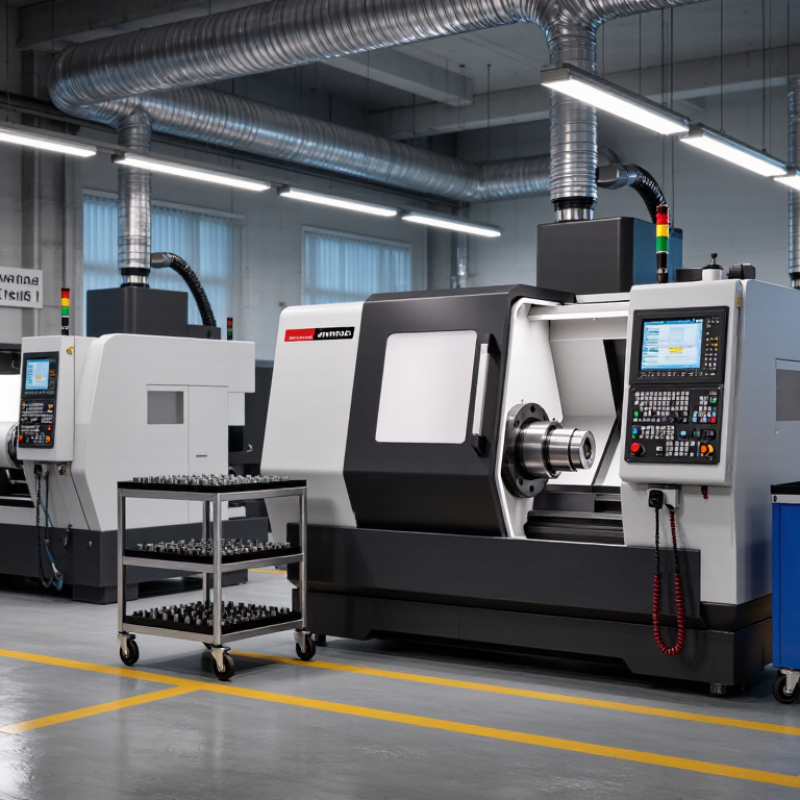
A lathe machine rotates a workpiece while a cutting tool removes material with controlled movement. In 2026, that definition includes more than spindle speed and maximum turning diameter. A modern lathe should combine CNC control, stable thermal performance, accurate tooling, and measurable process data. The International Federation of Robotics reported 541,302 industrial robots installed worldwide in 2023. This growth shows why machine connectivity and automation now influence purchasing decisions. Yet automation is not always the answer. A simple, rigid machine may outperform a complex system in low-volume workshops.
Tips: Check the real application first. Measure material, part length, tolerance, batch size, and operator skill. Request cutting tests using your own workpiece. A glossy specification sheet cannot reveal vibration at the tool tip.
Energy use also helps define a 2026 lathe. ISO 14955 provides a framework for evaluating machine-tool energy efficiency, including operating and standby conditions. Buyers should examine idle power, compressed-air demand, chip handling, and maintenance access. Remote diagnostics can reduce downtime, but weak network security creates practical risks. I have seen buyers focus heavily on micron-level accuracy while ignoring foundation quality and coolant control. That is an expensive mistake. A reliable lathe is therefore accurate, serviceable, upgradeable, and matched to its production environment.
Choosing the best lathe in 2026 depends less on headline specifications and more on production conditions. An engine lathe suits repair shops, prototypes, and low-volume parts. It offers direct operator control and simpler maintenance. CNC turning centers fit repeat production, especially for shafts, bushings, and threaded components. Swiss-type lathes serve small, precise parts, while vertical lathes handle large, heavy workpieces with stable loading.
The International Federation of Robotics reported 541,302 industrial robots installed worldwide in 2023. That figure shows why automation-ready lathes matter to global buyers. A CNC machine with bar feeding, probing, and robotic loading can reduce handling time. However, automation is not automatically profitable. Operators still need training, reliable electricity, suitable tooling, and local technical support. A low-cost machine may become expensive when spare parts take twelve weeks to arrive.
Energy use also deserves attention. The International Energy Agency identifies industrial motors as major electricity consumers worldwide, so spindle efficiency and standby controls affect operating costs. I would compare cycle time, power demand, coolant systems, and service access together. Not only maximum spindle speed.
Standards, documentation, and safety functions should be checked before purchase. The ISO 14955 series provides guidance for evaluating machine-tool energy efficiency. Buyers should request repeatability tests using their own materials. Steel, aluminum, and heat-resistant alloys behave differently. A perfect lathe does not exist. The best choice is the one that matches local skills, part geometry, production volume, and realistic maintenance capacity.
How Different Lathe Types Serve Global Manufacturing Needs
| Lathe Type | Typical Workpiece Size | Typical Spindle Speed | Automation Level | Best-Suited Materials | Key Manufacturing Uses | Main Advantages | Important Limitations | Global Buyer Fit | Overall Capability |
|---|---|---|---|---|---|---|---|---|---|
| Engine Lathe | Swing: 250–800 mm Distance between centers: 500–3,000 mm |
Approximately 40–2,000 rpm, depending on size and configuration | Manual; optional digital readout | Steel, stainless steel, cast iron, aluminum, brass and engineering plastics | General turning, facing, threading, boring, grooving and repair work | Versatile, relatively simple to maintain, suitable for varied low-volume work | Operator-dependent; lower repeatability and productivity than CNC equipment | Good for workshops, maintenance departments, technical schools and mixed-batch production | ★★★★☆ |
| CNC Turning Center | Swing: 400–900 mm Maximum turning diameter: approximately 200–700 mm |
Approximately 2,500–6,000 rpm | High; programmable multi-axis control and automatic tool indexing | Carbon steel, alloy steel, stainless steel, aluminum, copper alloys and titanium | Repeat production, precision shafts, flanges, bushings, fittings and hydraulic components | High repeatability, faster cycle times, reduced manual intervention and strong process control | Higher purchase cost; requires trained programmers and stable electrical service | Strong choice for export-oriented factories and medium-to-high volume production | ★★★★★ |
| CNC Slant-Bed Lathe | Swing: 450–750 mm Maximum turning diameter: approximately 250–500 mm |
Approximately 3,000–6,000 rpm | High; commonly equipped with automatic tool changers | Steel, stainless steel, aluminum and difficult-to-machine alloys | High-throughput turning, drilling, boring, threading and complex component production | Good chip evacuation, rigid cutting structure and efficient automated production | More complex servicing; usually less economical for one-off repair work | Well suited to automotive, machinery, energy and subcontract manufacturing | ★★★★★ |
| Swiss-Type CNC Lathe | Bar diameter: approximately 3–32 mm Some larger models handle up to about 38 mm |
Approximately 5,000–12,000 rpm, with live-tool speeds often higher | Very high; guide-bushing support and multi-tool machining | Stainless steel, titanium, cobalt alloys, brass and small aluminum parts | Medical components, miniature shafts, electronic connectors, precision fasteners and small fittings | Excellent support near the cutting tool, high accuracy and efficient small-part production | Higher programming complexity; limited workpiece diameter and higher tooling costs | Best for specialized suppliers producing large quantities of small, precise components | ★★★★★ |
| CNC Mill-Turn Center | Turning diameter: approximately 300–800 mm Turning length: approximately 500–1,500 mm |
Turning spindle: approximately 2,000–5,000 rpm | Very high; turning, milling, drilling and sometimes five-axis interpolation | Steel, stainless steel, aluminum, nickel alloys and titanium | Complex parts requiring multiple operations, such as impellers, valves, housings and aerospace components | Completes several operations in one setup, reducing alignment errors and work-in-process time | High capital cost, demanding programming and more complex maintenance | Suitable for high-value, complex parts where fewer setups justify the investment | ★★★★★ |
| Vertical Turning Lathe | Typical swing: 800–4,000 mm or more Suitable for large, heavy workpieces |
Approximately 20–800 rpm, depending on diameter and load | Manual, CNC or hybrid configurations available | Cast iron, carbon steel, stainless steel and heavy forgings | Large flanges, wheels, turbine parts, gear blanks, bearing housings and valve bodies | Efficient loading of heavy parts; gravity supports workpieces on the table | Large footprint, substantial foundation requirements and slower spindle speeds | Strong fit for energy, mining, transportation, shipbuilding and heavy-equipment industries | ★★★★☆ |
| Turret Lathe | Bar or chuck work: approximately 25–150 mm Medium-sized models vary by design |
Approximately 100–2,500 rpm | Manual, semi-automatic or CNC | Steel, brass, aluminum, cast iron and other common production metals | Repeated turning, drilling, tapping, reaming and forming operations | Multiple tools are readily available, reducing setup time for repetitive work | Less flexible than modern mill-turn equipment for highly complex geometries | Practical for repetitive components where moderate automation and controlled cost are priorities | ★★★★☆ |
| Toolroom CNC Lathe | Swing: 300–600 mm Distance between centers: approximately 500–1,500 mm |
Approximately 2,000–4,000 rpm | Medium; CNC programming with flexible manual intervention | Tool steel, aluminum, brass, stainless steel and plastics | Prototype parts, molds, fixtures, maintenance components and short production runs | Flexible setup, good precision and easier transition between different jobs | Lower throughput than dedicated production turning centers | Useful for research facilities, prototype departments, vocational training and job shops | ★★★★☆ |
| Automatic Bar Lathe | Bar diameter: approximately 5–65 mm Capacity depends on spindle and bar-feeding system |
Approximately 1,000–6,000 rpm | High; automatic bar feeding and cycle operation | Brass, aluminum, mild steel, stainless steel and free-machining alloys | High-volume production of screws, pins, bushings, fittings and standardized turned parts | Low labor input, consistent cycle times and efficient material utilization | Less economical for low quantities or frequently changing product designs | Recommended for suppliers with stable demand and standardized part families | ★★★★☆ |
Note: Dimensions and speed ranges are typical industry ranges for comparison. Actual capacity depends on machine configuration, spindle motor, tooling, workholding, material and local electrical standards.
When comparing lathe machines in 2026, buyers should examine working capacity before chasing impressive specifications. A longer bed does not automatically suit every workshop. Check maximum turning diameter, swing over the cross-slide, spindle bore, and distance between centers. These dimensions decide whether a machine can handle a 90-millimeter shaft without awkward repositioning. Grand View Research estimated the global CNC machine tools market at about USD 83 billion in 2023, showing strong demand for capable, automated equipment. However, market growth does not make every machine suitable.
Control quality matters as much as mechanical size. Review positioning accuracy, repeatability, interpolation performance, and available programming functions. ISO 230-2 provides a recognized method for testing positioning accuracy and repeatability in numerically controlled machine tools. Ask suppliers for recent test results, not only catalog claims. A useful trial includes steel and aluminum cuts, measured with calibrated instruments. Shorter setup time is valuable, but poor chip evacuation can quickly erase that advantage. It is easy to overlook coolant access, guarding, lighting, and operator visibility.
Energy use and maintenance deserve closer attention. The International Energy Agency reports that industry consumed roughly 37% of global final energy in 2022, so efficient motors and standby controls can affect operating costs. Check service response times, spare-part availability, lubrication access, and software support. I have found that a cheaper machine may require more adjustment than expected. No comparison is perfect. Buyers should also calculate installation, training, tooling, and downtime costs before approving the purchase.
Which features matter most when comparing lathe machines?
The weighting model reflects practical purchasing priorities for industrial buyers: machine rigidity and accuracy influence part quality, spindle capacity and motor power determine work capability, while control systems and service support affect productivity and long-term operating cost.
2026 Best Lathe Machines for Global Buyers?
A capable lathe is only part of a safe purchase. Supplier evaluation should begin with traceable evidence, not polished brochures. Request factory audit records, serial-numbered inspection sheets, spindle runout results, and a video of final testing. ISO 9001 certification helps, but the ISO Survey 2023 recorded more than 1.2 million certificates worldwide. Certification alone cannot prove consistent machining quality. Visit the plant when possible. Look at calibration labels, chip control, coolant handling, and how operators record defects.
Compliance must match the destination market. Confirm the machine’s electrical design, guarding, emergency stops, noise data, and user manuals against applicable requirements. ISO 12100 supports machinery risk assessment, while IEC 60204-1 covers electrical equipment. Ask for a complete conformity file, not a single declaration. A customs delay can cost more than a small price difference. I learned this the hard way. Missing voltage details can disrupt installation.
After-sales support needs measurable terms. Ask for response times, spare-parts availability, remote diagnostics, technician coverage, and training hours. The International Federation of Robotics reported 541,302 industrial robots installed globally in 2023, showing how quickly factory automation is expanding. Lathe suppliers should therefore understand integration, not only metal cutting. Test the support channel before payment. Send a technical question. The reply reveals much. A written warranty is useful, but local service capacity matters more. Maybe I overvalue documentation; however, undocumented promises are difficult to enforce.
For global buyers, the right lathe begins with the workpiece, not the catalog. Record material, maximum diameter, length, chuck size, tolerance, and monthly volume. A small shaft and a large casting demand different spindle torque. Check usable swing, not headline swing. This distinction is easy to miss. The 2024 World Machine Tool Survey reported that Asia represented roughly two-thirds of global machine-tool consumption. That figure makes regional service capacity important, even when purchasing from abroad.
Compare spindle speed with cutting data for your actual material. High speed is useless when the tooling, power supply, or workholding cannot support it. The World Robotics 2024 report recorded 541,302 industrial robot installations worldwide in 2023. For unattended turning, ask about bar feeding, tool monitoring, chip evacuation, and safe restart functions. Do not buy automation on promise alone. Request sample-cut results, dimensional inspection records, and references from similar production environments.
Accuracy claims need context. ISO 230-2 testing covers positioning accuracy and repeatability, but factory results also depend on temperature, fixturing, tooling, and operator habits. Calculate five-year cost, including energy, coolant, training, spare parts, software, and maintenance travel. One uncomfortable lesson remains: the cheapest machine can become the costliest when support crosses time zones. I would still challenge my own assumptions. A premium spindle is wasted if production volume stays low.