
China Best Milling Machine Manufacturer and Supplier
Choosing China’s best Milling Machine manufacturer requires more than comparing prices or polished product photos. It requires evidence from the factory floor. Experienced buyers examine spindle accuracy, table movement, casting quality, control systems, and long-term service support. A reliable supplier should provide inspection records, material details, machine testing videos, and clear technical specifications. ISO certification can strengthen confidence, but it should not replace independent verification.
Taiichi Ohno, the respected Toyota production expert, said, “Without standards, there can be no improvement.” This principle applies directly to every Milling Machine purchase. A capable Chinese manufacturer should follow consistent assembly procedures, calibration routines, and final testing standards. Ask how technicians measure backlash, check vibration, and confirm repeatability under load. Small details matter. A loose connection can become costly downtime.
Real production experience also reveals uncomfortable truths. No supplier is perfect. Even a strong factory may have communication gaps, delayed spare parts, or limited support in unfamiliar markets. That possibility deserves honest attention. Buyers should request sample machining results, customer references, warranty terms, and remote troubleshooting procedures before signing an order. A serious supplier will welcome practical questions rather than hide behind marketing language.
The best partner combines engineering knowledge, transparent documentation, responsive service, and proven delivery performance. China offers many capable Milling Machine manufacturers, but the right choice depends on verified capability. Look beyond the lowest quotation. Inspect the process behind the machine.
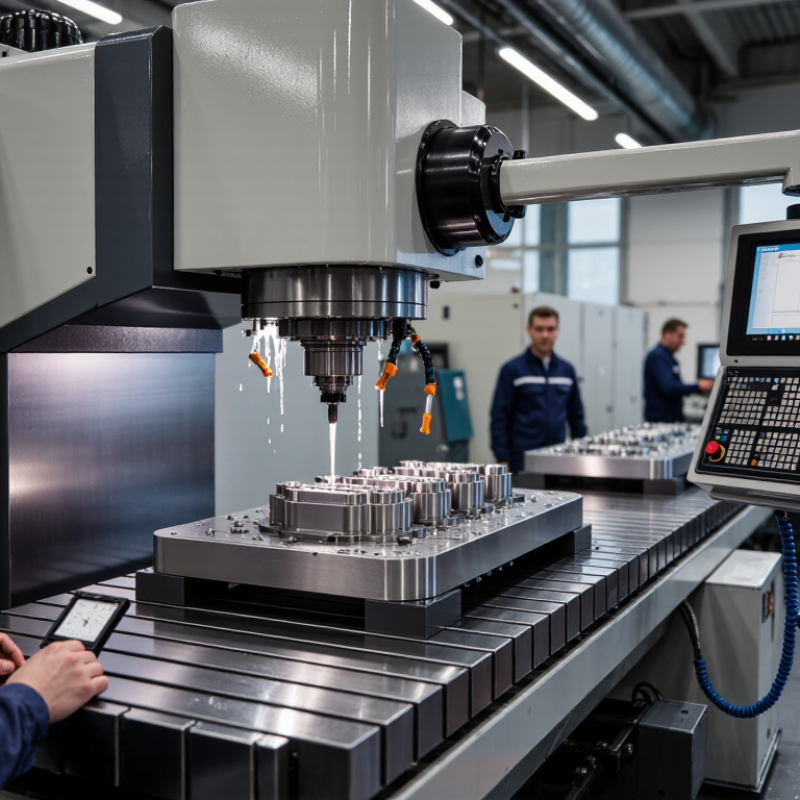
China’s Milling Machine Industry: Types, Applications, and Market Data
China Best Milling Machine Manufacturer and Supplier
China’s Milling Machine Industry: Types, Applications, and Market Data
China’s milling machine industry serves automotive, aerospace, mold-making, energy, and general metalworking. Common equipment includes vertical mills, horizontal mills, gantry mills, and five-axis machining centers. Vertical machines suit smaller workshops and varied parts. Gantry systems handle large plates, frames, and welded structures.
Applications are becoming more specialized. A five-axis center can machine turbine blades with fewer setups. A horizontal machine improves chip removal during deep cavity work. In daily production, accuracy depends on more than the machine itself. Spindle stability, thermal control, tool management, and operator training matter greatly. Coolant should remain clean. Small neglect becomes visible on finished surfaces.
Available market reports place China’s CNC machine tool market above 10 billion US dollars annually, but definitions vary between sources. Some figures include turning, grinding, and forming equipment. Milling-only data is harder to isolate. That limitation deserves attention. China remains a major producer and exporter, supported by extensive supply chains for motors, controls, castings, and precision components. Domestic demand is also moving toward automation, flexible production, and energy efficiency. Buyers should verify test-cut results, positioning accuracy, service response, and spare-parts availability before comparing prices. A low purchase cost can hide higher maintenance expenses. Real factory conditions often reveal more than a polished specification sheet.
| Category | Machine Type or Indicator | Key Technical Characteristics | Typical Applications | Common Materials | Relevant Data or Industry Fact |
|---|---|---|---|---|---|
| Milling Machine Types and Technical Characteristics | |||||
| Conventional Milling | Vertical Knee Mill | Manual feed, vertically oriented spindle, adjustable worktable, and relatively simple tool changes. | Maintenance work, toolrooms, education, repair operations, and low-volume machining. | Aluminum, steel, cast iron, brass, and engineering plastics. | Best suited to short production runs and parts that do not require extensive automation. |
| Conventional Milling | Horizontal Milling Machine | Horizontal spindle arrangement with arbor-supported cutters and strong material-removal capability. | Slots, grooves, gear-related work, heavy cuts, and long workpieces. | Carbon steel, alloy steel, cast iron, aluminum, and copper alloys. | Horizontal cutters generally provide good rigidity for heavy-duty cutting operations. |
| Computer Numerical Control | 3-Axis CNC Milling Machine | Independent linear movement along the X, Y, and Z axes; the workpiece is normally fixed during machining. | Plates, brackets, housings, molds, fixtures, and general prismatic components. | Aluminum, steel, stainless steel, titanium alloys, plastics, and composites. | Three-axis machining is widely used for flat surfaces, pockets, holes, contours, and 2.5D components. |
| Computer Numerical Control | 4-Axis CNC Milling Machine | Three linear axes plus one rotary axis, allowing several faces of a part to be accessed with fewer setups. | Indexing work, cylindrical parts, impellers, flanges, and components requiring multiple-side machining. | Aluminum, steel, stainless steel, brass, and titanium alloys. | One rotary axis can reduce setup time and improve positional consistency between features. |
| Computer Numerical Control | 5-Axis CNC Milling Machine | Three linear axes plus two rotary axes; simultaneous or indexed movement enables multi-face and complex-surface machining. | Aerospace structures, turbine-related components, medical parts, molds, dies, and complex prototypes. | Titanium alloys, nickel alloys, aluminum, stainless steel, tool steel, and composites. | Five-axis machining can reduce repositioning, tool overhang, and the number of workholding setups. |
| High-Production CNC | Vertical Machining Center | Vertical spindle, automatic tool changer, programmable feed, coolant system, and enclosed machining area. | Automotive parts, industrial equipment, electronics housings, fixtures, and batch production. | Aluminum, steel, cast iron, stainless steel, and engineering plastics. | Vertical machining centers are commonly selected for general-purpose prismatic machining. |
| High-Production CNC | Horizontal Machining Center | Horizontal spindle, palletized workholding, automatic tool changing, and strong chip evacuation. | Engine components, transmission parts, pump bodies, valve bodies, and large batch production. | Cast iron, carbon steel, alloy steel, aluminum, and stainless steel. | Horizontal layouts are advantageous when chip removal and multi-face machining are important. |
| Specialized Milling | Bed-Type Milling Machine | Rigid fixed bed with a moving table or spindle assembly, designed for heavier workpieces and cutting loads. | Large industrial parts, dies, machine bases, structural components, and heavy fabrication work. | Cast iron, carbon steel, alloy steel, and large aluminum components. | Rigid machine structures help limit deflection during heavy material removal. |
| Specialized Milling | Gantry or Portal Milling Machine | Bridge-type structure spanning a large work area, often configured with one or more machining heads. | Large molds, shipbuilding components, energy equipment, rail components, and aerospace structures. | Steel, cast iron, aluminum, composites, and large welded structures. | Gantry designs provide a large working envelope for oversized components. |
| Applications and Manufacturing Requirements | |||||
| Aerospace | Complex, Lightweight Components | Requires multi-axis interpolation, stable thermal behavior, high repeatability, and efficient chip evacuation. | Aircraft structural parts, brackets, housings, engine-related components, and tooling. | Aluminum alloys, titanium alloys, nickel alloys, and carbon-fiber composites. | Complex aerospace parts often require substantial material removal from forged or billet stock. |
| Automotive | Medium- to High-Volume Components | Prioritizes cycle time, repeatability, automated tool management, and reliable production scheduling. | Engine parts, transmission housings, brake components, suspension parts, and fixtures. | Aluminum, cast iron, steel, and magnesium alloys. | Automotive production commonly combines CNC milling with turning, grinding, inspection, and assembly processes. |
| Mold and Die | Freeform Surface Machining | Requires high contouring accuracy, short tools, stable spindle performance, and effective finishing strategies. | Injection molds, stamping dies, die-casting molds, and prototype tooling. | Pre-hardened steel, hardened tool steel, aluminum, copper alloys, and graphite. | Finishing quality depends on machine rigidity, toolpath quality, tool condition, and workholding stability. |
| Medical Equipment | Small, Precise Components | Requires repeatable positioning, clean process control, fine tooling, and traceable inspection. | Surgical instruments, orthopedic components, implants, and diagnostic equipment parts. | Titanium alloys, cobalt-chromium alloys, stainless steel, PEEK, and engineering plastics. | Medical components commonly require documented process control and inspection of critical dimensions. |
| Energy and Industrial Equipment | Large and Heavy Components | Requires high torque, rigid structures, large working envelopes, and robust workholding systems. | Pump bodies, valve components, turbine-related parts, compressor components, and machine frames. | Carbon steel, stainless steel, cast iron, nickel alloys, and aluminum. | Large workpieces often require dedicated fixtures, lifting equipment, and multi-stage machining plans. |
| Electronics and General Engineering | Small-Batch Precision Parts | Emphasizes short setup times, flexible programming, high spindle speeds, and fine surface finishing. | Enclosures, heat sinks, connectors, fixtures, laboratory equipment, and custom assemblies. | Aluminum, copper, brass, plastics, and stainless steel. | Aluminum and copper components may require sharp tools, controlled feeds, and effective chip evacuation. |
| Market and Industry Data Indicators | |||||
| Global Industry Structure | CNC and Conventional Equipment | The market includes machining centers, CNC mills, manual mills, retrofit systems, tooling, software, and service. | Manufacturing, maintenance, education, prototyping, and production engineering. | Not applicable | Demand is influenced by industrial automation, reshoring, capital investment, labor availability, and energy costs. |
| China Market Position | Manufacturing and Export Base | China has a broad machine-tool supply chain covering castings, controls, spindles, drives, tooling, and automation. | Domestic manufacturing, contract machining, infrastructure equipment, automotive, electronics, and export production. | Not applicable | China is one of the world’s major machine-tool manufacturing and consumption markets, with strong demand for CNC upgrades. |
| Technology Trend | Automation and Smart Manufacturing | Integration of automatic tool changers, pallet systems, probing, condition monitoring, production data collection, and robotics. | High-mix production, unattended machining, repeatable batch manufacturing, and lights-out production cells. | Not applicable | Digital monitoring and automation are increasingly used to improve utilization, traceability, and predictive maintenance. |
| Investment Trend | Retrofitting and CNC Replacement | Older manual or legacy CNC equipment can be upgraded with new controls, drives, motors, encoders, guarding, and probing. | Small and medium-sized workshops, maintenance departments, job shops, and cost-sensitive factories. | Not applicable | Retrofits can extend equipment life while reducing the capital cost and installation time of a complete replacement. |
| Quality and Accuracy | Positioning and Repeatability | Performance depends on machine geometry, thermal stability, backlash control, calibration, tooling, and workholding. | Precision components, molds, medical parts, aerospace parts, and inspection-critical assemblies. | Not applicable | Machine-tool accuracy testing is commonly evaluated using recognized methods such as ISO 230-series standards. |
| Environmental Performance | Energy and Coolant Management | Efficiency measures include variable-speed drives, optimized cutting parameters, minimum-quantity lubrication, and coolant filtration. | Factories seeking lower operating costs, reduced waste, and improved environmental performance. | Not applicable | Energy consumption is affected by spindle power, axis movement, coolant systems, idle time, and cutting conditions. |
| Data Basis | Interpretation of Market Information | Technical specifications vary by machine size, configuration, controller, tooling, material, and manufacturer. | Equipment selection, supplier comparison, production planning, and investment analysis. | Not applicable | Technical ranges and industry statements are indicative; final selection should be verified against machine-specific specifications, test conditions, and applicable standards. |
Related Posts
-
2026 Best Universal Milling Machine Options for Precision Engineering?
-
10 Essential Tips for Choosing the Right Milling Machine for Your Needs
-
2025 Top Universal Milling Machine Features and Buying Guide
-
How to Choose the Best Milling Drilling Machine for Your Needs?
-
How to Choose the Best Milling Machine for Your Needs?
-
Universal Milling Machine Best Options for Global Buyers?