How to Choose the Right Hydraulic Press Brake for Your Needs?
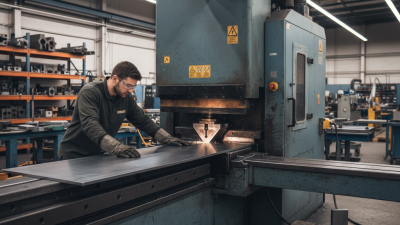
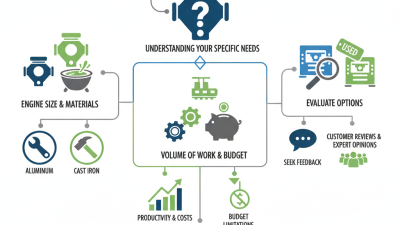
Choosing the right Hydraulic Press Brake can significantly impact your operations. With numerous options available, this process can be overwhelming. Finding the ideal machine involves understanding your specific needs and project requirements.
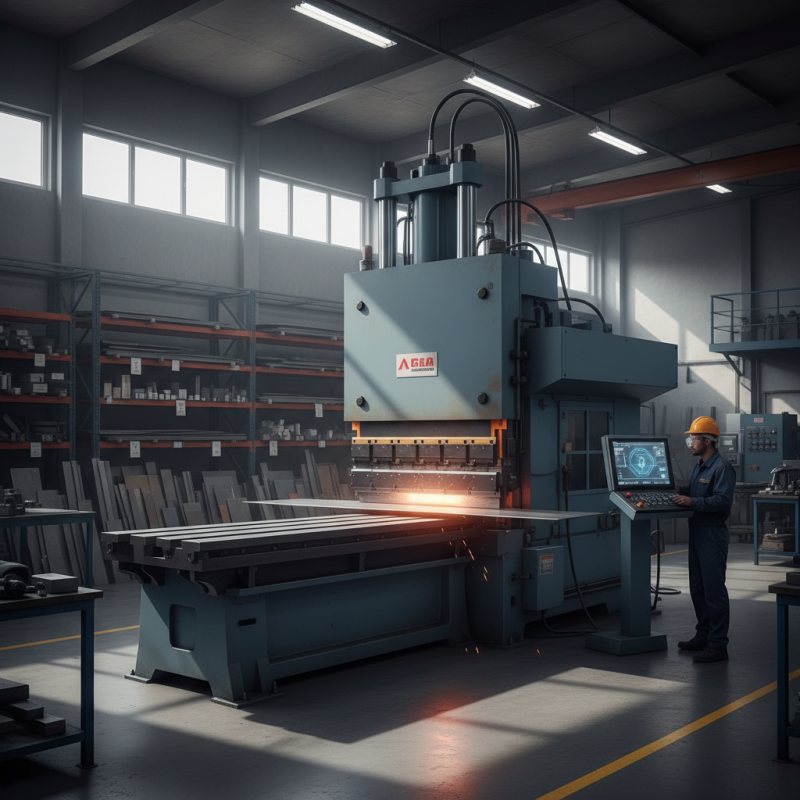
Hydraulic Press Brakes are essential for bending metal sheets accurately. They come in various sizes and capacities. An unsuitable choice may lead to inefficiencies and wasted resources. It is vital to evaluate features such as tonnage, bed length, and control systems.
Consider the materials you often work with. The thickness and type of metal will influence your selection. Reflect on your production volume as well. A machine that fits your current needs might not suffice in the future. Paths to improvement are often hidden in the details.
Understanding Hydraulic Press Brakes: Types and Applications
Hydraulic press brakes are essential tools in metal fabrication. Understanding their types and applications helps in making the right choice. There are several types of hydraulic press brakes, such as conventional, tandem, and CNC. Each type serves specific purposes, from simple bending tasks to complex automation.
For example, conventional press brakes work well for basic fabricating needs. They allow manual adjustments and are cost-effective. However, they may not meet higher production demands. On the other hand, CNC press brakes offer precision and efficiency. They enable automated programming for intricate designs, making them suitable for high-volume work.
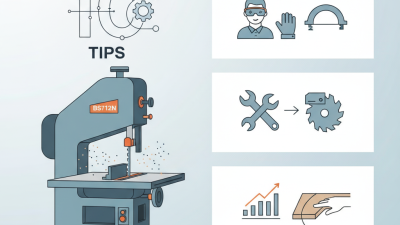
Tips: When choosing a hydraulic press brake, consider your production volume. Assess your bending needs based on material types and thicknesses. A well-matched machine saves time and reduces errors. Test different models if possible. Listen to user feedback, as first-hand experiences can reveal flaws. Sometimes, an underpowered machine leads to frustrations and delays. Select a machine that adapts as your operations grow. This foresight can prevent costly mistakes down the road.
Key Specifications to Consider When Selecting a Press Brake
When selecting a hydraulic press brake, key specifications are crucial. The type of material you are working with significantly impacts your choice. For instance, some industries require bending metal sheets that are 10 mm thick or more. Understanding your material's tensile strength is essential. A report from the Fabricators and Manufacturers Association states that approximately 42% of manufacturing errors are linked to improper selection of equipment.
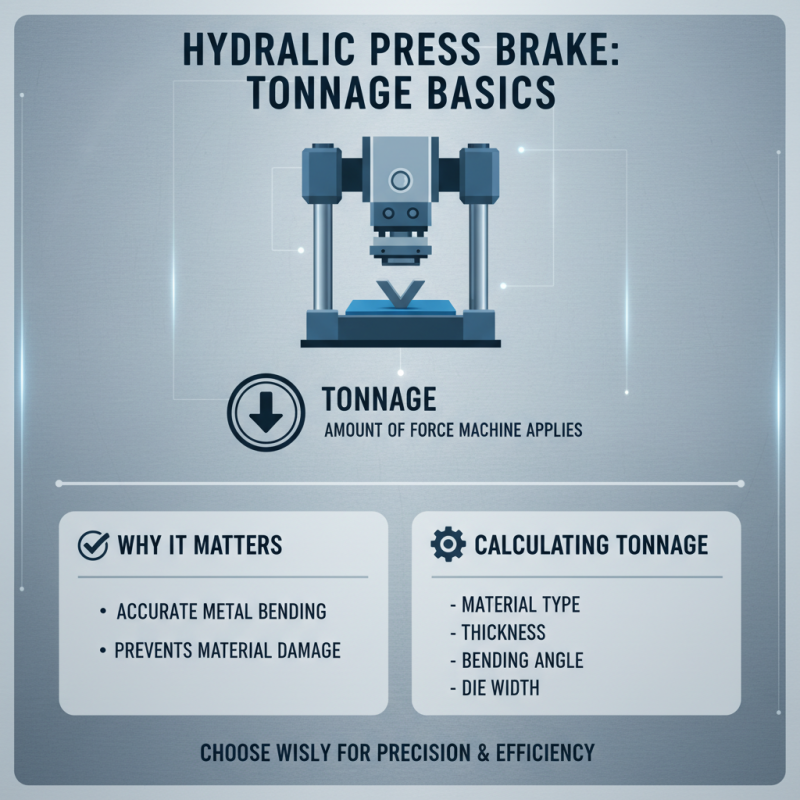
Another vital consideration is the tonnage of the press brake. The required tonnage depends on the material thickness and length. Generally, a rule of thumb is 1 ton per foot of the bend. For example, bending a 10-foot sheet may require about 10 tons. Yet, some operations might need more or less tonnage based on specific use cases. This can lead to overpaying for excessive capacity, or underperformance with insufficient power.
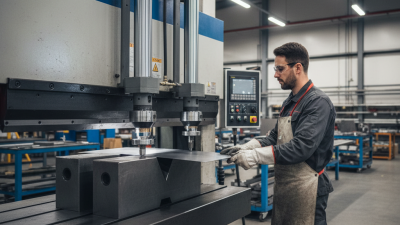
Additionally, pay attention to the control system. Modern CNC controls provide enhanced accuracy and repeatability. They also facilitate complex bends that traditional systems may struggle with. However, these advanced systems can be challenging to operate. Data from an industry survey shows that 35% of organizations report difficulties in using new technology without proper training. Understanding the balance between capability and usability is vital for better outcomes.
How to Choose the Right Hydraulic Press Brake for Your Needs?
| Specification |
Importance |
Recommended Range |
| Bending Capacity (tonnage) |
Crucial for determining the thickness and type of material you can work with |
40 - 800 tons |
| Table Length |
Affects the length of material you can work with |
4 - 16 feet |
| Back Gauge Accuracy |
Impacts precision in bending operations |
± 0.01 - ± 0.05 mm |
| Control Type |
Determines ease of use and programming capabilities |
CNC, Manual, Hybrid |
| Stroke Length |
Influences bending depth and versatility |
6 - 20 inches |
| Power Source |
Impacts operational costs and efficiency |
Hydraulic, Electric, Mechanical |
| Weight Capacity |
Necessary for safety and stability during operation |
1 - 5 tons |
Assessing Bend Length and Width for Optimal Performance
When selecting a hydraulic press brake, assessing bend length and width is crucial. The bend length directly affects your bending capabilities. A longer bend length allows for more extensive components, while shorter options are better for smaller parts. It’s essential to consider the types of materials you will work with. Thinner metals require different bending techniques compared to thicker materials. Choosing the wrong length might lead to inefficiencies in production.
Width is equally important. A narrow width can limit the types of bends you can achieve. If your projects involve complex designs, this limitation could prove frustrating. Additionally, varying the width might lead to inconsistencies in bends. Engineers often make mistakes here; they may under-specify the width and regret it later. Evaluating project requirements thoughtfully can avoid this pitfall.
Try to visualize your project needs. Picture the items you will create. Are they predominantly large or small? This clarity can guide your decision. It’s easy to get lost in specifications. Reflecting on your actual usage can reveal surprises. You might discover you need additional features beyond basic bending. In this case, taking time to choose wisely pays off.
Determining Control Systems: Manual vs. CNC for Efficiency
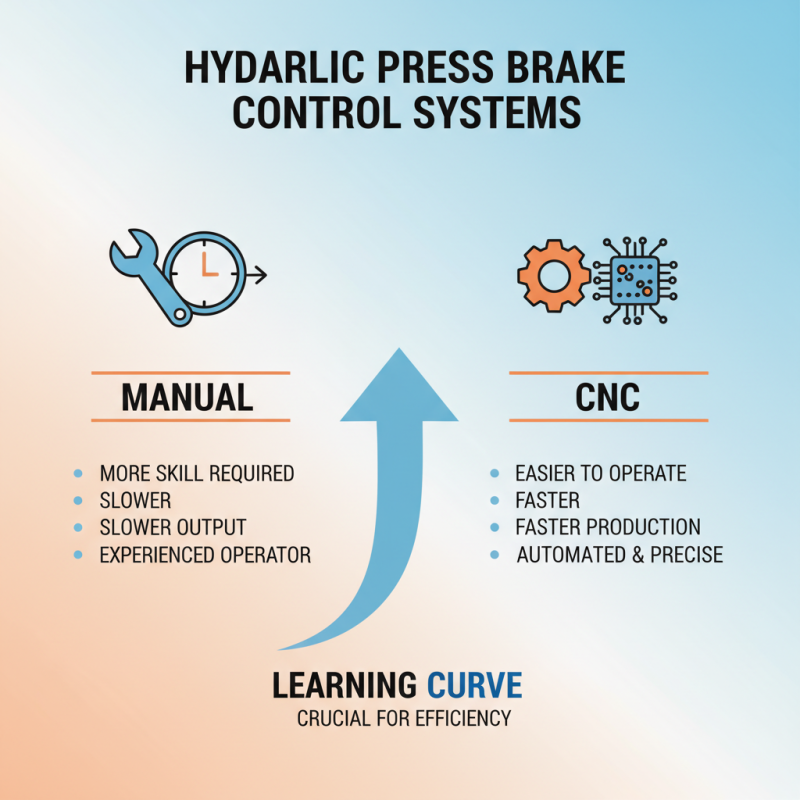
When choosing a hydraulic press brake, the control system is crucial. You can opt for manual or CNC systems. Manual systems may seem more straightforward, but they require more skill and can be slower. An operator must be highly trained and experienced for efficient output. There's a learning curve that takes time to master.
CNC systems are digital and provide greater precision. They allow for quicker programming and adjustments. However, the initial cost is higher. Plus, there’s a reliance on software that can sometimes malfunction. If a programmer lacks experience, the results can be unsatisfactory. Mistakes might occur, leading to costly errors.
Choosing the right system depends on your needs. Manual systems suit smaller operations with minimal production. CNC is better for larger businesses needing speed and accuracy. Each option has pros and cons. You must weigh your specific requirements and resources carefully. Evaluate whether you want more hands-on control or prefer automation for efficiency.