10 Essential Tips for Choosing the Right Metal Bandsaw for Your Workshop?
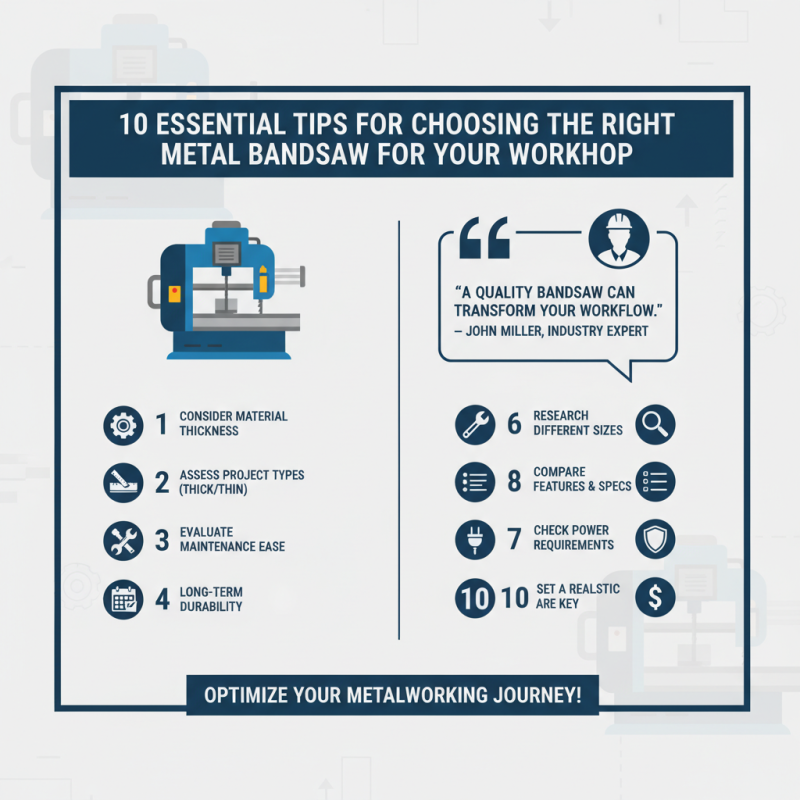
In the world of metalworking, choosing the right Metal Bandsaw is crucial. According to industry expert John Miller, “A quality bandsaw can transform your workflow.” With so many options available, it can be overwhelming to decide which one suits your workshop needs best.
Metal Bandsaws come in various sizes and features. Some are designed for cutting thick materials, while others are more suitable for thin sheets. You should consider your specific projects when selecting a bandsaw. A wrong choice can lead to inefficiency and frustration in your workshop.
Also, ensure that maintenance is manageable for your selected model. A well-maintained Metal Bandsaw can last for years. However, not all machines are user-friendly. Assessing your comfort level with tools is key. Choosing wisely ensures smoother operations and better results in your metalworking journey.
Understanding the Different Types of Metal Bandsaws Available
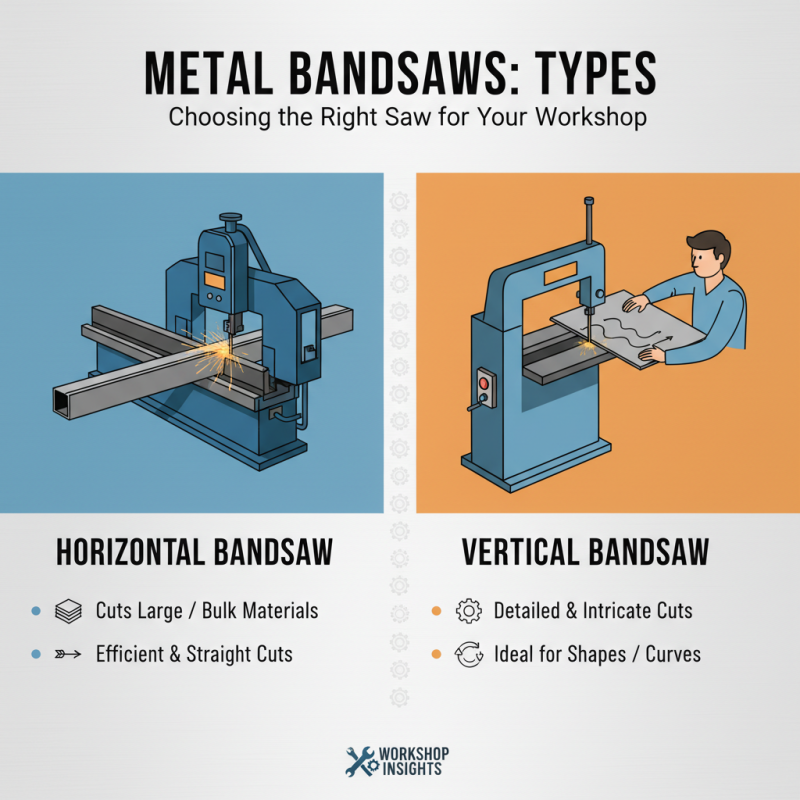
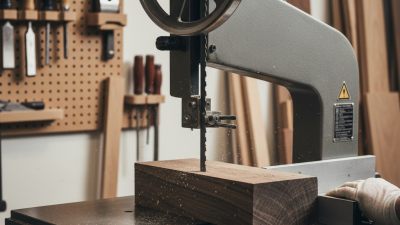
When selecting a metal bandsaw for your workshop, understanding the types available is crucial. Metal bandsaws can be categorized into horizontal and vertical models. Horizontal bandsaws are ideal for larger pieces, providing efficient cutting for bulk materials. In contrast, vertical bandsaws excel in detailed work, allowing for intricate cuts and curves in sheet metal.
While choosing a bandsaw, consider the cutting capacity. It’s vital to ensure it meets your workshop needs. A recent industry report indicated that 65% of users prioritize cutting capacity. Look for models that offer sufficient throat depth and height for your projects. Additionally, pay attention to blade speed options. Variable speed settings can enhance versatility, making it easier to cut different materials.
Tip: Assess the durability of materials used in the bandsaw’s construction. Steel frames are often more robust than aluminum. Another tip is to consider the machine’s weight. Heavier models tend to be more stable during operation, yet they may require more effort to move. It’s essential to weigh these factors carefully to avoid potential regrets later on.
Assessing the Cutting Capacity and Size for Your Workshop Needs
When selecting a metal bandsaw, assessing cutting capacity is crucial. The size of materials you plan to cut directly influences your choice. Consider the maximum width and height of the cuts. A small bandsaw may not handle larger steel pieces well. Think about your projects. Will you often work with thick metals? Then, a bandsaw with more power is necessary.
Space in your workshop is another factor. Larger bandsaws take up more room. Ensure you have adequate space for the tool and safe operation. You might find yourself cramming equipment together, which can lead to accidents. It's essential to maintain a safe environment where you can work efficiently.
Lastly, reflect on your level of experience. If you're a beginner, a more straightforward model may suit you. Advanced users might prefer features that offer more complexity. It's essential to think critically about your needs and capabilities. Sometimes, what seems ideal may not be practical in your workshop setting. The right choice balances size and capability with your actual requirements.
Evaluating the Motor Power and Speed Options for Efficiency
When evaluating a metal bandsaw for your workshop, motor power and speed options are crucial. A powerful motor enhances cutting efficiency and allows you to work with tougher materials. Look for motors with various wattage ratings. They can range widely, influencing performance significantly. A less powerful motor may struggle with dense metals, leading to frustrating slowdowns.
Speed options matter too. Variable-speed models offer flexibilities, such as switching from fast cuts to precision work easily. For thicker materials, slower speeds are often more effective. They reduce the risk of overheating and provide cleaner cuts. Not all users understand this aspect, which can lead to mistakes during operation.
Consider your typical projects. If you constantly switch between tasks, a flexible speed range may save time in the long run. However, high-speed capabilities tend to increase noise and vibrations. Balancing power and speed is essential for achieving efficiency without compromising comfort. Always reflect on past experiences to improve your choice.
10 Essential Tips for Choosing the Right Metal Bandsaw for Your Workshop
| Model |
Motor Power (HP) |
Speed Options (RPM) |
Cutting Capacity (inches) |
Weight (lbs) |
Price ($) |
| Model A |
1.5 |
900 / 1500 |
12 x 12 |
250 |
500 |
| Model B |
2 |
800 / 1600 |
14 x 14 |
300 |
800 |
| Model C |
1 |
1000 / 1800 |
10 x 10 |
220 |
450 |
| Model D |
2.5 |
600 / 1200 |
16 x 16 |
350 |
950 |
Considering the Build Quality and Durability of the Bandsaw
When selecting a metal bandsaw, the build quality is crucial. A well-constructed bandsaw stands up to daily use. Look for solid materials that resist wear and tear. For example, cast iron frames provide stability and reduce vibration. A sturdy base keeps the bandsaw steady, ensuring accurate cuts. Inspect the welds and joints; weak points can lead to future failures.
Durability is equally important. Consider the parts that will undergo the most stress, like the blade guides. High-quality bearings will extend the life of your saw. Check if the parts are replaceable. This feature can save you money in the long run. Examine the finish, too. A protective coating prevents rust and corrosion.
Keep in mind that not every bandsaw has to be perfect. Sometimes imperfections can signal uniqueness. A small dent might not affect performance, but it could lower the price. Reflect on how often you plan to use the bandsaw and choose accordingly. It's wise to strike a balance between quality and your budget. Over time, a solid investment pays off, but starting with the right foundation is key.
10 Essential Tips for Choosing the Right Metal Bandsaw
This chart illustrates the critical factors to consider when selecting a metal bandsaw for your workshop, rated on a scale of 1 to 10 based on their importance.
Identifying Essential Features and Accessories for Enhanced Performance
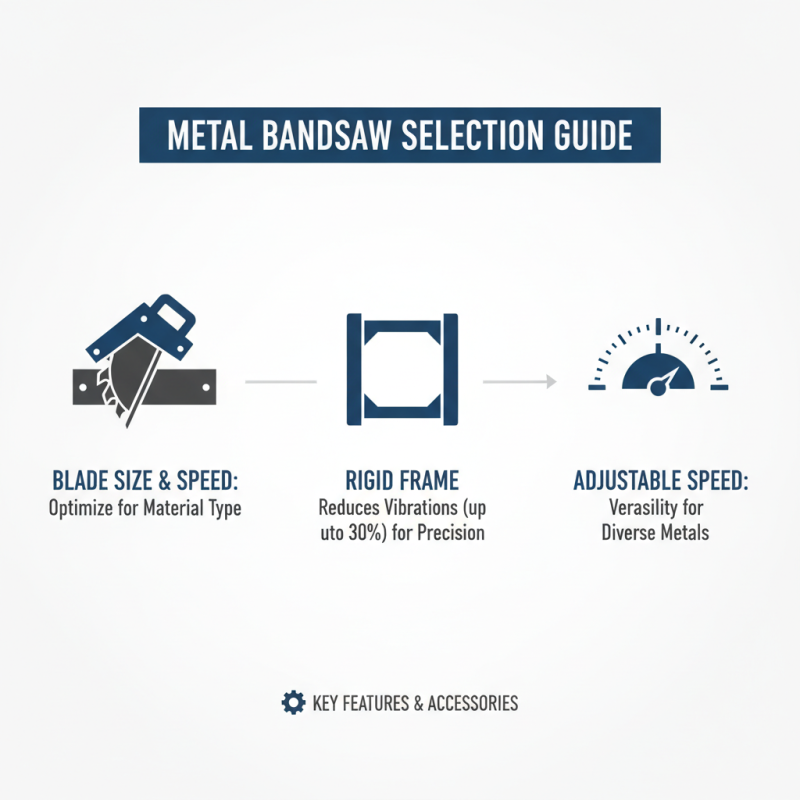
When selecting a metal bandsaw, features and accessories significantly impact performance. Important features include blade size, cutting speed, and frame rigidity. A robust frame helps minimize vibrations and ensures accurate cuts. According to industry reports, vibrations can reduce cutting performance by up to 30%. Choosing a bandsaw with adjustable speeds allows for versatility across different materials.
Consider essential accessories to maximize the bandsaw's capabilities. A high-quality blade is crucial. Blades with higher tooth counts provide smoother finishes on thinner materials. The right coolant system can also enhance cutting efficiency and prolong blade life. Reports indicate that proper cooling can extend blade lifespan by over 20%. Dust collection systems improve the workspace's cleanliness and safety.
Every workshop has unique needs. Evaluate the type of materials you plan to cut and the expected workload. Bandsaws with insufficient power can stall, leading to frustration. Look for models with a minimum of 1 HP motor for standard applications. It's essential to reflect on your workspace size as well. Bandsaws can be bulky. Make sure there's enough room for safe operation and maintenance.