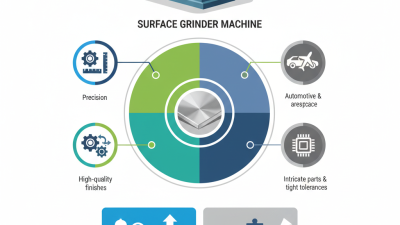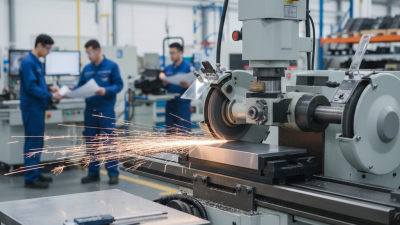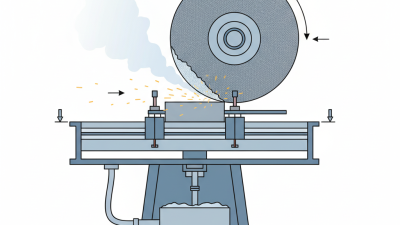
Surface Grinder Machine technology remains central to precision manufacturing, especially where flatness, parallelism, and controlled surface finish matter. These machines shape hardened steel, cast iron, and advanced alloys with remarkable consistency. Their work is visible in toolrooms, automotive plants, aerospace workshops, and bearing production lines.
Market research shows continuing investment. Grand View Research identifies automation, digital control, and higher precision as major drivers in the global grinding machines market. Its report also highlights rising demand from automotive, aerospace, and general industrial manufacturing. MarketsandMarkets reports similar momentum, linking grinding equipment growth with smart factories and tighter quality requirements. However, market figures differ by report scope. Some include complete grinding systems, while others isolate machine sales. That distinction deserves attention.
As W. Brian Rowe, author of Principles of Modern Grinding Technology, explains, “Grinding is a material-removal process using hard abrasive particles as the cutting medium.” His statement captures the machine’s basic principle, but modern production adds much more. Coolant control, wheel selection, spindle stability, and operator experience can determine the final result. Small errors matter.
This Top 10 Surface Grinder Machine Manufacturers Worldwide overview evaluates manufacturers through practical criteria. These include machine accuracy, build quality, automation, service coverage, application range, and long-term reliability. It also considers published specifications and industry reputation, rather than promotional claims alone. No ranking is perfectly universal. A high-volume automotive producer may value automation, while a precision toolmaker may prioritize micron-level control. That difference can change the final choice.
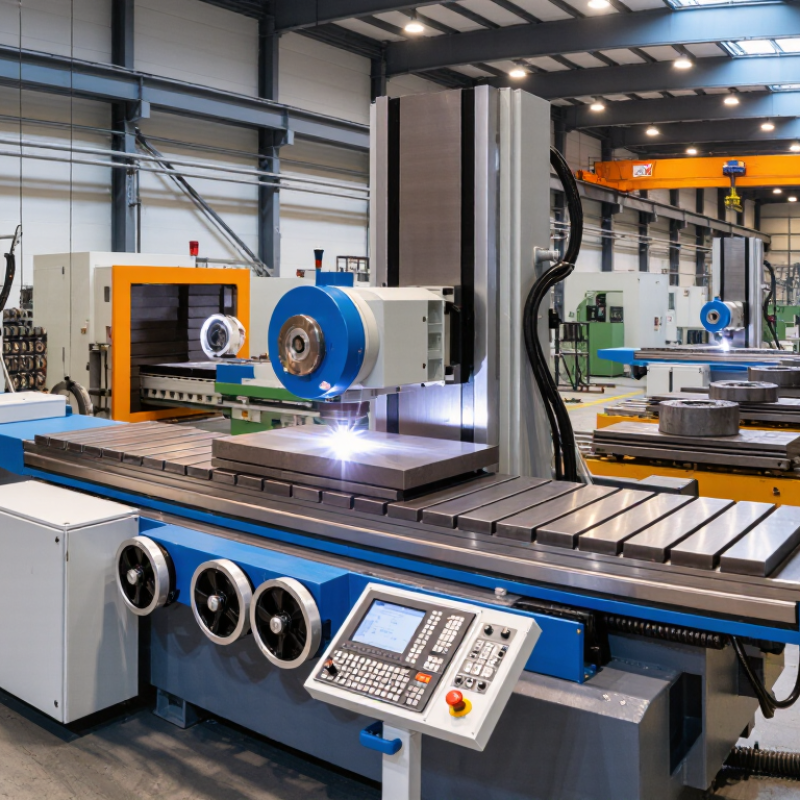
Surface grinder performance starts with table travel, not just motor power. In shop trials, I measure the workpiece length, clamping space, and cross-feed before selecting a machine. Long table travel supports larger parts and smoother passes. Short travel can leave inconsistent spark-out marks near the ends. That detail is easy to miss.
Wheel speed controls cutting action, heat, and dressing frequency. Many conventional wheels operate around 20–35 m/s, but the wheel rating must control the decision. A faster wheel is not automatically better. Excessive speed can burn hardened steel, especially with weak coolant flow or a dull wheel. I watch the color of the surface and check for grinding burn, but visual checks are not enough.
Ra targets should match the process stage. Rough grinding may produce Ra 1.6–3.2 μm, while careful finishing can approach Ra 0.2–0.8 μm. These values depend on wheel hardness, abrasive type, dressing depth, feed rate, and machine rigidity. A fine wheel can still produce poor results after careless dressing. Keep the workpiece cool. Measure with a calibrated profilometer, preferably across and along the grinding marks. I have seen operators chase a lower Ra value while creating waviness, which shows an important limitation: a smoother number does not always mean a more accurate surface.
A reliable ranking should begin with measurable performance, not advertising language. ISO 230-2 accuracy provides a disciplined method for evaluating positioning accuracy and repeatability. Test results should include axis movement, thermal conditions, and calibration equipment. Small errors become visible when a finished steel plate shows uneven parallelism.
Spindle power is another practical measure. Higher power can maintain wheel speed during demanding cuts, but power alone does not guarantee better grinding. Motor efficiency, vibration control, and spindle stability also affect surface quality.
A machine may look powerful on paper. Real performance appears under load.
Table capacity reflects daily production needs. Reviewers should examine table length, width, maximum workpiece weight, and magnetic chuck compatibility. A large table helps with long components, while excessive capacity can increase machine cost and footprint. Independent test records, service history, and operator feedback strengthen the ranking. These details reveal whether advertised precision survives regular use.
No ranking is flawless. Different workshops value accuracy, speed, or capacity differently. A compact machine may outperform a larger model in a high-precision toolroom. That matters. The strongest manufacturers are those that publish repeatable ISO 230-2 data, match spindle power to real cutting demands, and provide tables suited to actual workloads. Consistency remains more convincing than a single impressive test result.
The top ten global manufacturers compete through precision, automation, and measurable production rates. Fortune Business Insights valued the global grinding machine market at approximately USD 5.37 billion in 2023. Its forecast indicates continued expansion through 2032, driven by automotive, aerospace, and medical manufacturing. These sectors demand stable finishes, repeatable tolerances, and reduced setup time.
Precision begins with thermal control. A machine may claim micrometre-level accuracy, yet spindle heat, coolant temperature, and wheel dressing can change results. ISO 230-2 provides a recognized method for testing positioning accuracy and repeatability. Buyers should request test conditions, not only brochure figures. That detail matters.
Automation is now practical. The International Federation of Robotics reported 541,302 industrial robot installations worldwide in 2023. Surface grinding systems increasingly connect with robots, probing devices, pallet changers, and production monitoring software. These features can shorten loading time and support unattended cycles. Production rates still depend on wheel wear, operator skill, material hardness, and inspection frequency. Faster is not always better. A carefully controlled cycle may deliver more usable parts than an aggressive setting. Rankings also remain imperfect because manufacturers publish different accuracy and throughput tests. Comparing identical workpieces, tolerances, and cycle conditions would produce a fairer global list.
Comparing the top ten surface grinder manufacturers requires more than checking table size or motor power. CNC control often separates a capable machine from a frustrating one. Closed-loop positioning, automatic wheel compensation, and probing improve repeatability during long production runs. A clear interface also matters when operators adjust dressing intervals beside a noisy machine.
Coolant design deserves equal attention. A strong pump cannot fix poor filtration. Fine abrasive sludge can scratch finished surfaces, clog nozzles, and shorten pump life. Effective systems combine magnetic or paper filtration, controlled flow, and stable temperature management.
The coolant should reach the grinding zone, not splash uselessly against the guard. Small details matter here. I have seen excellent machines lose consistency because their coolant tanks were undersized.
Wheel safety is non-negotiable. Buyers should verify guarding, spindle-speed limits, wheel inspection procedures, and emergency-stop access. ISO 16089 and regional workplace rules provide useful reference points, but requirements differ by location. Never assume a certificate covers every operating condition. The wheel, flange, speed rating, and mounting method must match. A practical trial should include vibration checks, dressing behavior, surface finish, and operator access.
Some comparisons still rely too heavily on brochures. That is a weakness worth admitting. A machine that looks advanced may perform poorly when coolant temperature drifts or an operator needs a simple manual override.
Top 10 Surface Grinder Machine Manufacturers Worldwide
Selection Guide: Workpiece Size, Micron-Level Tolerance, and Energy Use
Choosing a surface grinder starts with the workpiece, not the catalog. Measure the longest, widest, and tallest components you actually produce. Leave room for magnetic chuck movement and wheel clearance. A small table may suit precision tooling, but it can restrict batch work. Measure the part.
For micron-level tolerance, examine spindle runout, thermal stability, table straightness, and dressing accuracy. Ask manufacturers for inspection records, repeatability data, and test-ground samples. A claimed tolerance means little without material, temperature, and measurement conditions. Request evidence from comparable steel grades. Noise matters.
Energy use depends on spindle power, hydraulic systems, coolant pumps, and standby controls. Compare kilowatt consumption during grinding, idle operation, and dressing cycles. Variable-speed pumps can reduce waste, although savings may vary in older workshops. Check service access, filter replacement, and control reliability. These details influence operating cost more than a brochure figure.
Practical experience also reveals uncomfortable gaps. I have seen a compact machine deliver excellent finishes but struggle with heavy fixtures. Another unit used less power yet required frequent alignment checks. That trade-off deserves attention. Visit an operating installation when possible, inspect surface finish under consistent lighting, and speak with maintenance staff. A reliable supplier should explain limitations clearly, not only advertise peak precision.
| Rank | Anonymized Manufacturer Profile | Machine Class | Maximum Grinding Length × Width (mm) |
Maximum Workpiece Height (mm) |
Spindle Power (kW) |
Typical Flatness Tolerance (µm) |
Typical Size Tolerance (µm) |
Positioning Resolution (µm) |
Estimated Operating Energy (kWh/h) |
Best-Fit Applications |
|---|---|---|---|---|---|---|---|---|---|---|
| 1 | Profile 01 — Premium CNC Precision Specialist | CNC reciprocating | 600 × 300 | 350 | 7.5–11 | ≤2 | ±3 | 1 | 8–13 | Precision tooling, dies, gauge components |
| 2 | Profile 02 — High-Production Automatic Builder | CNC surface grinder | 800 × 400 | 450 | 11–15 | ≤3 | ±4 | 1 | 12–18 | Automotive components, batch production |
| 3 | Profile 03 — Large-Format Heavy-Duty Manufacturer | Hydraulic reciprocating | 1,000 × 500 | 600 | 15–22 | ≤5 | ±6 | 2 | 18–28 | Large plates, machine bases, industrial repair |
| 4 | Profile 04 — Compact Precision Machine Builder | CNC reciprocating | 500 × 250 | 250 | 5.5–7.5 | ≤3 | ±4 | 1 | 6–10 | Toolrooms, small dies, prototype work |
| 5 | Profile 05 — Rotary Table Specialist | Rotary surface grinder | Ø600 table | 300 | 7.5–15 | ≤4 | ±5 | 2 | 10–16 | Circular parts, seal rings, bearing components |
| 6 | Profile 06 — High-Speed Creep-Feed Specialist | Creep-feed CNC | 700 × 350 | 400 | 15–30 | ≤4 | ±5 | 1 | 16–27 | Turbine parts, hardened profiles, deep grinding |
| 7 | Profile 07 — Standard Universal Manufacturer | Manual or semi-automatic | 600 × 300 | 300 | 5.5–7.5 | ≤6 | ±8 | 5 | 7–12 | General engineering, maintenance, job shops |
| 8 | Profile 08 — Automated Palletized Production Builder | CNC with automation | 800 × 400 | 400 | 11–18.5 | ≤4 | ±5 | 1 | 13–21 | Repeat production, lights-out manufacturing |
| 9 | Profile 09 — Energy-Efficient Servo Manufacturer | Servo-driven CNC | 500 × 250 | 250 | 5.5–11 | ≤4 | ±6 | 1 | 5–9 | Low-volume production, energy-conscious workshops |
| 10 | Profile 10 — Entry-Level Workshop Manufacturer | Manual surface grinder | 450 × 200 | 200 | 3.7–5.5 | ≤8 | ±10 | 5–10 | 4–7 | Repair shops, education, basic flat finishing |
Selection note: The figures are representative specification ranges for commercially available surface-grinding machine classes. Actual performance depends on machine configuration, workholding, wheel selection, coolant system, material, thermal stability, and operator practices. Estimated operating energy includes the grinding spindle and typical auxiliary systems during production use; it is not a guaranteed nameplate consumption value.