Welcome to our websites!

What Is the Best Turret Milling Machine From China?

Choosing the best Turret Milling Machine from China requires more than comparing prices or reading polished catalog descriptions. In a real workshop, the machine must hold a stable cut, repeat dimensions, and survive long production days. A machinist notices small details quickly: handwheel backlash, spindle noise, table movement, and the finish left on mild steel. These details often reveal more than a specification sheet. Yet “best” is not universal. A repair shop may value compact size, while a production team may need power, rigidity, and dependable service.

This guide examines Chinese turret milling machines through practical and technical criteria. We will consider spindle speed range, motor output, table travel, quill accuracy, column rigidity, control layout, and safety features. Supplier experience also matters. Ask for inspection records, test-cut videos, component brands, warranty terms, and realistic delivery support. A responsible manufacturer should explain tolerances clearly, not hide behind impressive photographs. Independent quality checks can add confidence, especially when the buyer cannot visit the factory.

There is room for judgment here. A lower-cost machine may perform well, but savings can disappear after difficult installation or delayed spare parts. Conversely, a famous brand is not automatically the right choice for every workshop. We will compare evidence, not assumptions, and identify where each model fits best. Expect useful guidance, but not a perfect verdict. Machine selection still depends on material, workload, operator skill, budget, and local support.
What Is the Best Turret Milling Machine From China?

What Is a Turret Milling Machine and How Does It Work?

What Is the Best Turret Milling Machine From China?

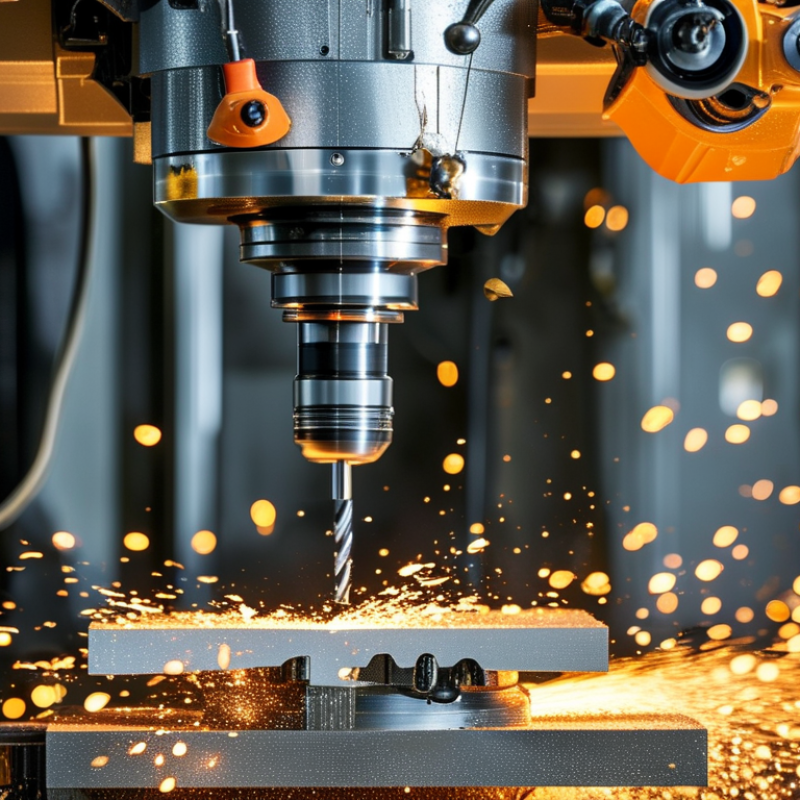
A turret milling machine is a vertical machining tool with a rotating spindle, adjustable ram, and movable worktable. The turret supports the head and allows the operator to change its position for flexible cutting. The spindle holds an end mill, drill, or face mill, then removes material from a secured workpiece. Depending on the model, the table may move manually or through powered feeds along the X, Y, and Z axes.

In daily workshop use, the operator clamps steel, aluminum, or cast iron on the table. They set spindle speed, feed rate, and cutting depth according to the material and tool diameter. The quill provides controlled vertical movement for drilling and shallow milling. A reliable machine should show minimal spindle runout, smooth table travel, strong lubrication, and clear scale readings. I have found that a heavier column often reduces vibration during deeper cuts. Still, weight alone does not guarantee accuracy. That assumption needs checking.

Tips: Request a test-cut report before purchase. Check spindle taper, motor power, table size, and travel range. Ask how accuracy is measured and maintained. Inspect the electrical system and emergency stop design. A machine with practical service support may be better than one with impressive specifications. The “best” turret mill depends on your workpiece size, production volume, operator skill, and tolerance requirements.

Which Features Define a High-Quality Chinese Turret Milling Machine?

The best turret milling machine from China is not defined by price alone. Its quality appears in the details an operator can feel during daily work. A rigid cast-iron column should resist vibration when cutting steel. The table must move smoothly, without tight spots or sudden backlash. Small flaws matter.

A high-quality machine usually has a hardened, accurately ground table and dependable ways. Check the spindle runout with a calibrated test indicator. A practical target is often within 0.01 mm, but the required tolerance depends on the job.

The spindle should run quietly at low and high speeds. Its bearings should not produce heat after extended operation. A positive quill lock helps maintain depth during drilling and boring. Variable-speed control is useful, though a simple gearbox may provide stronger torque.

I have inspected machines where the paint looked excellent, but the table alignment needed correction. Appearance is not accuracy. Ask for inspection records, test-cut results, and clear details about the motor, taper, feed system, and electrical protection. Reliable suppliers should explain service intervals and provide readable manuals. Independent measurements are stronger than promises. Leave room for doubt. A machine may meet factory specifications yet need careful setup on your floor. Check leveling, lubrication, and backlash again after installation. That extra hour can reveal problems before they reach a finished component.

How to Compare China’s Leading Turret Milling Machine Manufacturers?

Comparing China’s leading turret milling machine manufacturers requires more than checking spindle power or table size. Grand View Research valued the global machine tools market at about USD 86.65 billion in 2023, with continued growth expected through 2030. That pressure encourages faster production, but buyers should still verify basic accuracy. Request ISO 230-2 positioning tests, spindle runout readings, and repeatability data. A clean brochure is not enough.

Inspect the machine’s casting, guideways, turret movement, and control cabinet. Ask for actual test records, not only target specifications. For general metalworking, compare table load, spindle speed range, motor torque, and travel capacity against your parts. Check whether the manufacturer measures thermal drift after several hours. Small errors become visible around deep pockets and tight bores. They matter.

Service quality often separates similar machines. The 2024 World Machine Tool Survey reported continued investment in automation and digitally connected equipment, making software support increasingly important. Confirm remote diagnostics, spare-part availability, installation guidance, and technician response times. Calculate total cost over five years, including tooling, training, energy, and downtime. One overlooked detail is electrical compatibility. Another is operator access. I would also leave room for doubt: factory acceptance tests may not reproduce your material, tooling, or climate. Send sample drawings and demand a cutting trial. Compare chips, surface finish, cycle time, and measured dimensions. The cheapest quotation can become expensive when the first real job exposes weak support.

What Applications Suit Different Chinese Turret Milling Machine Models?

The best Chinese turret milling machine depends on the work, not its advertised power.

A knee-type turret mill suits repair shops, training rooms, and short production runs. Its movable head handles keyways, slots, and small aluminum parts efficiently.

A bed-type model offers greater rigidity for steel plates, molds, and repeated drilling. It is less convenient for frequent manual repositioning.

A ram-type machine fits large workpieces requiring extended reach, such as machine bases and structural components. However, excessive ram extension can reduce cutting stability.

CNC turret models serve higher-volume production and complex contours. They suit motorcycle components, pump bodies, fixtures, and small mold inserts.

According to Gardner Business Media’s 2024 World Machine Tool Survey, China’s machine-tool consumption reached roughly 31 billion US dollars in 2023. That scale supports broad domestic access to different configurations and replacement parts. Grand View Research estimated Asia-Pacific held more than half of global machine-tool revenue in 2023. Regional availability matters.

Check spindle taper, table travel, motor power, and controller support before ordering. A 10,000-rpm spindle helps aluminum, but it does not replace rigidity for hardened steel. A larger table can also reduce usable access around the workpiece.

In practical trials, operators should inspect backlash, surface finish, and repeatability under load. Ask for test-cut records, not only brochures. Some published accuracy figures seem impressive. They may reflect unloaded factory conditions. That is where buyers should remain skeptical.

How to Choose the Best Turret Milling Machine From China?

What Is the Best Turret Milling Machine From China?

How to Choose the Best Turret Milling Machine From China?

Choosing the best turret milling machine starts with the workpiece, not the price. Define material, cutting depth, table travel, spindle speed, and expected batch size. A compact machine may suit repair work, but it can struggle with hardened steel and continuous production. Test cuts matter. Ask the supplier for actual samples, surface-finish results, and cutting parameters.

China remains a major machine-tool market. Gardner Intelligence reported China’s 2022 machine-tool consumption at approximately 27 billion US dollars. This scale supports broad manufacturing capacity, but quality still varies between factories. Check the machine’s inspection records against ISO 230-2 methods. Request spindle runout, table flatness, positioning accuracy, and repeatability data. These figures are more useful than impressive catalog photographs.

Look closely at the cast iron structure, dovetail guideways, lubrication system, and electrical components. Ask how quickly replacement parts can arrive. A clear warranty is important, but local technical support may matter more. I would also require a factory acceptance test before shipment. The lowest quote is rarely the safest choice. Sometimes, a slightly heavier machine gives better stability during interrupted cuts. That said, I would not assume weight alone proves accuracy. Supplier claims need independent verification, and this is where many buyers remain too optimistic.

What Is the Best Turret Milling Machine From China? - How to Choose the Best Turret Milling Machine From China?

Evaluation Dimension Compact Manual Turret Mill Standard Manual Turret Mill Heavy-Duty Turret Mill CNC Turret Mill Recommended Selection Focus
Typical application Maintenance, education, light machining and prototypes General machining, repair work and small-batch production Steel parts, larger workpieces and higher material-removal rates Repeat production, complex profiles and reduced operator intervention Match the machine type to workload, part complexity and production volume
Typical table size 700–900 × 180–230 mm 1,000–1,270 × 250–280 mm 1,270–1,600 × 300–360 mm 800–1,500 × 300–500 mm Choose a table that supports the workholding fixture and leaves clamping clearance
Typical longitudinal travel, X-axis 400–550 mm 600–800 mm 800–1,000 mm 500–1,200 mm Allow additional travel for tool approach, fixture length and safe over-travel
Typical cross travel, Y-axis 180–250 mm 250–350 mm 350–450 mm 300–600 mm Verify usable travel after installing the vise, rotary table or other fixture
Typical vertical travel, Z-axis 300–400 mm 350–450 mm 400–500 mm 400–700 mm Check spindle clearance, tooling length and maximum workpiece height
Common spindle taper R8 or ISO 30 R8, ISO 30 or ISO 40 ISO 40 or ISO 50 ISO 40 or ISO 50 Select a taper with readily available holders, collets and cutting tools
Typical spindle speed range 80–3,800 rpm 60–4,200 rpm 50–3,000 rpm 60–8,000 rpm A wider range benefits mixed materials; high speed is not a substitute for spindle rigidity
Typical motor power 1.5–2.2 kW 2.2–4.0 kW 4.0–7.5 kW 5.5–15 kW Confirm rated power, duty cycle and electrical compatibility with the installation site
Spindle orientation Tilting turret head, commonly ±45° Tilting turret head, commonly ±45° Tilting or fixed heavy-duty head Tilting head or controlled multi-axis configuration Choose a tilting head for angled work; use controlled axes for repeatable angular machining
Approximate machine weight 700–1,100 kg 1,200–2,000 kg 2,000–3,500 kg 2,500–6,000 kg Greater mass generally improves vibration resistance, but confirm floor loading and delivery access
Positioning and control Manual handwheels; optional digital readout Manual handwheels; digital readout commonly available Manual or power-feed configuration CNC control with servo drives and programmable feed Use manual control for flexibility and low volume; use CNC for repeatability and complex work
Typical accuracy target Approximately ±0.05–0.10 mm, depending on setup Approximately ±0.03–0.08 mm, depending on setup Approximately ±0.03–0.08 mm, depending on setup Approximately ±0.01–0.05 mm, depending on machine condition and compensation Request inspection results under defined conditions rather than relying only on catalog claims
Best material range Aluminum, brass, plastics and light steel work Aluminum, steel, stainless steel and non-ferrous metals Steel, cast iron and larger alloy components Production machining across aluminum, steel and engineered alloys Base the choice on cutting forces, tool diameter, depth of cut and cycle time
Maintenance requirements Low; lubrication, belt checks and periodic adjustment Low to moderate; lubrication, alignment and wear inspection Moderate; lubrication, gearbox or drive inspection and alignment Moderate to high; CNC, servo, coolant and electrical-system maintenance Confirm spare-parts availability, manuals, service response and technician support
Main advantages Lower space requirement, simple operation and lower initial cost Balanced capability, broad tooling compatibility and easy operator access Higher rigidity, larger capacity and improved performance on difficult materials Repeatable production, programmable machining and reduced manual handling The best option is the one that meets required accuracy and output without excessive unused capacity
Key risks to verify before purchase Backlash, column rigidity, table flatness and electrical specification Spindle runout, turret locking, quill fit and guideway condition Foundation requirements, lifting method, power demand and transport dimensions Controller compatibility, servo tuning, post-processor support and after-sales service Ask for a live video test, inspection report, packing list, warranty terms and acceptance criteria
Selection guidance: For most general-purpose workshops, a standard manual turret mill with an ISO 40 or R8 spindle, a table around 1,000–1,270 × 250–280 mm, and a digital readout provides a practical balance of capacity, flexibility and operating cost. Choose a heavy-duty configuration for frequent steel machining, or a CNC turret mill when repeatability, production volume and complex toolpaths are the primary requirements.
Note: The specifications above are typical ranges for comparable turret milling machine categories. Actual values vary by configuration and should be confirmed through a technical datasheet, inspection report and machine acceptance test.

Send your message to us:

WhatsApp Online Chat !