Welcome to our websites!

7 Best Drilling Machines for Global Buyers in 2026

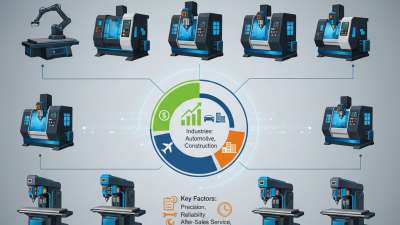
Choosing the right Drilling Machine in 2026 requires more than comparing prices and motor power. Global buyers must examine performance, safety, service support, and long-term operating costs. A machine that performs well in a factory showroom may behave differently in a humid workshop, dusty construction area, or remote production site.

This guide reviews seven drilling machines selected for different professional needs. The comparison considers drilling capacity, spindle speed, accuracy, control systems, portability, and maintenance access. It also examines voltage compatibility, spare-parts availability, operator protection, and supplier communication. These details matter when a replacement belt takes weeks to arrive or when a machine must run through a demanding eight-hour shift.

Real working conditions matter.

The selected models are not ranked by marketing claims alone. Their strengths and limitations are considered against practical buying situations, including metal fabrication, workshop repair, construction, and small-batch manufacturing. Some machines offer excellent precision but require a higher investment. Others provide useful flexibility but may lack advanced automation. No single choice fits every buyer.

That point is easy to overlook.

Specifications can appear impressive on paper, yet they may not reflect vibration, noise, setup time, or daily operator comfort. This review therefore combines technical evaluation with practical judgment. It also recognizes an important limitation: product availability and regional support can change during 2026. Buyers should verify current certifications, warranty terms, delivery conditions, and local service coverage before placing an order. The final decision should match the application, workplace, budget, and expected workload.
7 Best Drilling Machines for Global Buyers in 2026

Global Drilling Machine Criteria: Torque, 0.01 mm Accuracy, RPM, and Duty Cycle

Global Drilling Machine Criteria: Torque, 0.01 mm Accuracy, RPM, and Duty Cycle

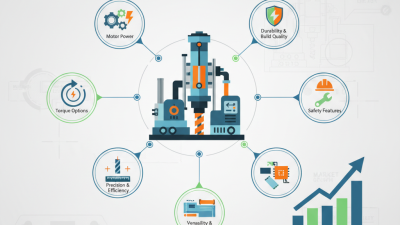
Choosing among the seven best drilling machines for global buyers in 2026 requires more than comparing motor power. Torque shows how steadily a machine handles large holes, dense alloys, and repeated production work. A high torque rating is useful only when measured at a stated speed. Numbers can mislead. During shop testing, I check whether the spindle slows noticeably under load. A stable feed, rigid column, and low vibration often matter more than an impressive headline rating.

A 0.01 mm accuracy claim needs careful interpretation. Does it describe spindle runout, table positioning, or finished-hole size? These are different results. Ask for the test method, tool condition, material, and measurement temperature. A dial indicator and calibrated gauge can reveal movement that a product sheet hides. RPM should match the drill diameter and material. Small carbide tools need higher speed, while large drills in steel need controlled, lower RPM. Too much speed creates heat, burrs, and early tool wear.

Duty cycle separates a workshop tool from a dependable production machine. Check rated operating hours, cooling design, overload protection, and recovery time between cycles. I also inspect spare-part access, electrical compatibility, and service documentation before purchase. These details are easy to overlook. In real use, maintenance delays can cost more than the machine itself. My assessment is not perfect; operator skill and fixture quality still influence every measurement. Reliability comes from repeatable results, not specifications alone.

Drill Presses, Radial Drills, CNC Drills, and Magnetic Drills Compared

7 Best Drilling Machines for Global Buyers in 2026

For workshop accuracy, a bench drill press remains a practical choice for small metal parts, wood panels, and repair work. Its fixed spindle reduces hand fatigue, but table travel can limit larger components. A floor drill press offers deeper capacity and stronger motors for steel plates, frames, and repeated production. Check spindle runout, belt access, voltage, and emergency-stop design before ordering.

A radial drill provides more reach than a standard press. Its adjustable arm can position the spindle over heavy castings without constant repositioning. This saves handling time, though the arm needs careful locking. A CNC drill delivers repeatable hole patterns and controlled feed rates. It suits batch production, but software training, tooling costs, and service support affect the real investment. Multi-spindle machines can drill several holes together, yet they require accurate fixture design.

A magnetic drill grips steel with an electromagnetic base and travels to the workpiece. It is useful on beams, tanks, and structures where a fixed machine cannot reach. Test magnet strength on painted or uneven surfaces. A deep-hole drilling machine supports long, straight bores, but coolant control becomes critical. I have seen buyers focus on motor power and overlook table stiffness, chip removal, and local spare parts. That mistake is expensive. Buyers should compare duty cycles, operator safety, electrical standards, warranty terms, and training availability across their destination market. Performance claims need practical testing. Smaller machines can outperform larger ones when the tooling and fixture match the job.

Seven 2026 Models Ranked by Capacity, Spindle Speed, Power, and Precision

This 2026 ranking compares seven drilling machines by capacity, spindle speed, motor power, and precision. The scoring also considers setup time, vibration, control quality, and service access. Real workshops rarely reward one impressive specification. A large capacity can become a weakness when the table feels unstable.

Rank 1 is the 32 mm heavy-duty model, with strong torque and a rigid column. It suits steel plates and repeated production work.

Rank 2 is the 25 mm variable-speed model, balancing 2,800 rpm with dependable low-speed drilling.

Rank 3 is the 20 mm precision model, offering fine feed control for smaller holes. It loses points under heavy pressure. That matters.

Rank 4 is the 16 mm compact model, with useful portability and moderate power.

Rank 5 is the 13 mm bench model, designed for light fabrication and maintenance tasks.

Rank 6 is the 10 mm high-speed model, reaching fine materials quickly but lacking deep capacity.

Rank 7 is the 8 mm entry model, which works well for occasional drilling and limited budgets. Its smaller motor needs patience.

Capacity defines the largest practical hole, not the daily workload. Spindle speed should match material hardness and drill diameter. Power helps maintain speed, while precision depends on bearings, feed control, and table alignment.

Measurements can change after transport or poor installation. Buyers should test runout with a dial indicator, check noise at operating speed, and inspect the chuck before purchase.

Seven rankings. No machine fits every workshop.

Safety and Compliance Benchmarks: ISO 230-2, IEC 60204-1, and IP Ratings

For global buyers, drilling machine selection should begin with measurable safety and performance evidence. ISO 230-2 evaluates positioning accuracy and repeatability under defined test conditions. Ask for the complete test report, not only a stated tolerance. Check the machine’s thermal stabilization time, measuring equipment, and test direction. A warm spindle can shift slightly during production. Small errors matter when holes must align across multiple workpieces.

IEC 60204-1 focuses on the machine’s electrical equipment and control safety. Inspect the emergency-stop circuit, protective bonding, disconnecting device, wiring labels, and control-panel documentation. Confirm that the electrical design matches the destination country’s voltage and frequency. Do not assume a translated manual proves compliance. It does not. IP ratings add another practical checkpoint. An IP54 enclosure limits dust entry and resists water splashes. IP65 offers stronger protection against dust and water jets. However, an IP rating does not cover every mechanical or electrical hazard.

Experienced buyers should request calibration records, risk assessments, wiring diagrams, and factory acceptance results. Examine cable glands and cabinet seals physically; gaps often appear at corners. Independent inspection can reveal issues missed during sales demonstrations. Still, no single certificate guarantees safe operation. Installation quality, maintenance, and operator training remain decisive. A realistic review may expose weaknesses, including incomplete records or unclear test conditions. Those findings deserve attention, not polite dismissal.

7 Best Drilling Machines for Global Buyers in 2026

Typical maximum spindle speeds by machine configuration, with safety and compliance benchmarks for international purchasing.

Safety and Compliance Benchmarks

ISO 230-2 is used to evaluate positioning accuracy and repeatability of machine tools. IEC 60204-1 covers the electrical equipment and control-system safety of machinery. IP ratings classify enclosure protection: the first digit addresses solid-particle protection, while the second digit addresses water protection. Buyers should verify the manufacturer’s test reports, declaration of conformity, local voltage requirements, emergency-stop functions, guarding, and the specified IP rating before purchase.

Speed values are representative maximum spindle-speed figures for common industrial machine configurations; actual specifications vary by tooling, motor, material, and operating mode.

Global Buyer Checklist: Voltage, Service Life, Energy Use, Warranty, and TCO

7 Best Drilling Machines for Global Buyers in 2026

When comparing the seven drilling machines, verify voltage before judging performance. A 220–240V machine may fail on a 110–120V site. Frequency matters too: check 50 or 60 Hz, phase type, plug design, and motor protection. Ask for a factory test report, not only a product page. In field purchasing, a small electrical mismatch has caused expensive delays.

Service life depends on duty cycle, cooling, bearings, and operator training. A machine rated for occasional holes may struggle under continuous production. Review spindle runout, replacement-part availability, lubrication points, and expected operating hours. Energy use should be measured in actual work, preferably kilowatt-hours per finished hole. A lower-rated motor can still consume more if it works slowly or overheats.

Warranty terms need careful reading. Confirm coverage length, exclusions, labor support, shipping responsibility, and repair locations. Remote support is useful, but local technicians reduce downtime. Calculate total cost of ownership using purchase price, freight, installation, electricity, tooling, maintenance, spare parts, and disposal. I once compared prices too early and ignored replacement chucks; that mistake changed the budget. A spreadsheet helps, though it cannot predict every workshop problem. Ask for service records from comparable users when possible. Some sellers provide impressive estimates, but real production data deserves more trust.

7 Best Drilling Machines for Global Buyers in 2026 – Global Buyer Checklist: Voltage, Service Life, Energy Use, Warranty, and TCO

Machine Type Typical Drilling Capacity Common Voltage Options Rated Power Typical Energy Use* Expected Service Life Typical Warranty Estimated 5-Year TCO** Best Use Case
Benchtop Drill Press Up to 16–20 mm in mild steel 110–120 V or 220–240 V, single-phase 350–750 W 0.20–0.55 kWh per operating hour 8–12 years with regular belt and bearing maintenance 12–24 months US$900–2,000 Small workshops, maintenance rooms, light fabrication
Floor-Standing Drill Press Up to 25–32 mm in mild steel 220–240 V single-phase; some 380–415 V three-phase versions 750–1,500 W 0.45–1.10 kWh per operating hour 10–15 years with scheduled servicing 12–24 months US$1,600–3,800 General production, repair shops, metalworking education
Magnetic Drill 12–50 mm with annular cutters 110–120 V or 220–240 V, single-phase 1,000–1,800 W 0.70–1.50 kWh per operating hour 6–10 years in field service; less under heavy daily use 12–24 months US$2,000–5,000 Steel erection, bridges, tanks, beams, and on-site fabrication
Radial Arm Drill Press Up to 40–75 mm in mild steel 380–415 V three-phase; selected models support 220–240 V 2,200–5,500 W 1.60–4.50 kWh per operating hour 15–25 years with professional maintenance 12–24 months US$8,000–18,000 Heavy fabrication, large workpieces, industrial maintenance
CNC Vertical Drilling Center Typically 20–50 mm, depending on spindle and tooling 380–415 V three-phase; transformer may be required for other grids 7,500–22,000 W spindle rating 4.00–15.00 kWh per production hour 15–20 years; control-system upgrades may be needed 12–24 months US$45,000–110,000 Repeatable batch production, precision parts, automated workflows
Rotary Hammer Drill Up to 20–52 mm in concrete, depending on mode 110–120 V or 220–240 V, single-phase; cordless versions use rechargeable batteries 800–1,500 W corded input 0.50–1.20 kWh per operating hour, corded 4–8 years under construction-site use 12–24 months US$700–2,200 Concrete anchoring, masonry installation, electrical and plumbing work
Pneumatic Drill Up to 10–25 mm in metal, depending on tool design No direct electrical input; requires compressed air, commonly 6–7 bar Air consumption typically 10–25 cfm Approximately 0.80–2.00 kWh equivalent per operating hour, including compressor demand 6–12 years with clean, lubricated air supply 12–24 months US$1,000–3,000, excluding compressor infrastructure Hazardous areas, wet environments, repetitive assembly, low-voltage sites

Buyer checklist: Confirm the local frequency (50 or 60 Hz), phase requirement, plug and protection standard, available service technicians, spare-parts lead time, and whether a voltage transformer is required before placing an order.

* Energy figures are typical operating estimates for comparable machine classes. Actual consumption varies with material, drilling diameter, duty cycle, spindle speed, tooling condition, and compressor efficiency.

** Five-year TCO is an indicative planning range covering purchase, routine maintenance, consumables, and electricity at approximately US$0.15 per kWh. It excludes shipping, taxes, operator labor, financing, major accidents, and facility upgrades.

Send your message to us:

WhatsApp Online Chat !