
China Top 10 Surface Grinder Machine Manufacturers?
China’s surface grinding sector has become an important part of the global machine tool supply chain. The 2024 World Machine Tool Survey by Gardner Intelligence shows China remains one of the largest machine tool production and consumption markets worldwide. This scale supports strong manufacturing capacity, broad component access, and competitive pricing. However, production volume alone cannot prove engineering quality.
Grand View Research’s Grinding Machines Market Size, Share and Trends Analysis Report identifies automotive, aerospace, precision engineering, and general manufacturing as major demand sectors. These applications require stable spindle performance, accurate table movement, consistent coolant delivery, and reliable long-term operation. A practical Surface Grinder Machine must also maintain repeatability when operators process hardened steel, tool parts, or mold components. Small details matter. Micron-level variation can affect an entire production batch.
This guide examines China’s top 10 Surface Grinder Machine manufacturers through measurable and practical criteria. These include machine structure, grinding accuracy, automation options, spindle configuration, quality control, export experience, certifications, and after-sales support. Information is cross-checked with company documentation, China Machine Tool Industry Association publications, product specifications, and user-oriented industry evidence. The ranking is not perfectly objective. Different factories serve different applications, budgets, and production scales. That limitation deserves attention.
Some manufacturers excel in standard hydraulic models. Others focus on CNC control, high-precision grinding, or customized production lines. Buyers should inspect test reports, reference installations, warranty terms, and spare-part response times before making a final decision. A polished brochure is not enough. Performance must survive the shop floor.
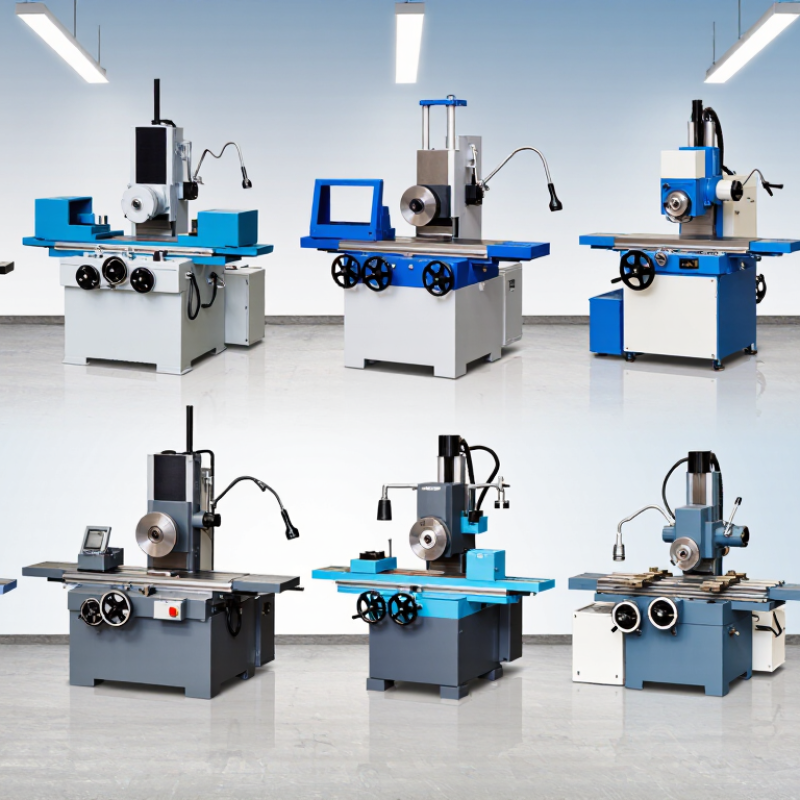
Surface Grinder Machines: Definition, Types, and Core Applications
A surface grinder removes small amounts of metal from a workpiece using a rotating abrasive wheel. It creates flat, accurate surfaces with controlled roughness. Unlike milling, grinding usually finishes hardened steel after heat treatment. The process can correct tiny distortions, but it cannot replace poor fixturing or incorrect machining allowances.
Common types include horizontal-spindle, vertical-spindle, rotary-table, and centerless surface grinders. Each suits different work. Horizontal-spindle machines finish long, narrow faces. Vertical-spindle models handle heavier stock removal. Rotary-table designs support repeated production cycles. Core applications include toolmaking, automotive components, aerospace parts, bearing seats, molds, and precision gauges. A 2024 market assessment from Grand View Research links grinding equipment demand with automation and tighter manufacturing tolerances. MarketsandMarkets projects the broader machine-tools market to grow steadily through 2029, supported by industrial automation and metalworking investment. These figures describe wider equipment categories, not surface grinders alone. That distinction matters.
Tips: Match wheel hardness, abrasive type, and coolant to the material. Check spindle vibration before blaming the wheel. Keep magnetic chucks clean and verify parallelism with a dial indicator. Use inspection data, not appearance, to judge accuracy. ISO 21920 guidance helps standardize surface-texture measurement, although shop conditions can still distort results. I have seen operators chase a poor finish with a finer wheel, while the real problem was uneven coolant flow. Small oversights matter.
China Top 10 Surface Grinder Machine Manufacturers? - Surface Grinder Machines: Definition, Types, and Core Applications
| No. | Machine Configuration | Operating Principle | Typical Working Capacity | Typical Accuracy Range | Suitable Workpieces | Core Applications | Key Selection Factors |
|---|---|---|---|---|---|---|---|
| 1 | Reciprocating-Table Surface Grinder | A grinding wheel moves across a worktable that reciprocates beneath the wheel. | Grinding widths commonly range from approximately 200 to 1,000 mm. | Typically about 0.005–0.02 mm flatness, depending on machine condition and process. | Dies, plates, blocks, guideways, and rectangular components. | Toolmaking, mold manufacturing, precision maintenance, and general machining. | Table size, longitudinal travel, spindle power, magnetic chuck, and coolant system. |
| 2 | Rotary-Table Surface Grinder | A circular table rotates continuously while the grinding wheel removes material from the workpiece surface. | Workpiece diameters commonly range from approximately 300 to 1,500 mm. | Typically about 0.005–0.015 mm parallelism under controlled conditions. | Circular parts, rings, sectors, and multiple small components arranged around a fixture. | Bearing components, hydraulic parts, circular plates, and batch production. | Table diameter, workholding method, loading efficiency, wheel diameter, and automation options. |
| 3 | Vertical-Spindle Surface Grinder | The spindle is positioned vertically, allowing the wheel face or side to grind the work surface. | Common table diameters or widths range from approximately 250 to 800 mm. | Typically about 0.01–0.03 mm, depending on setup and wheel selection. | Short, wide parts, segmented components, and parts requiring high stock removal. | Heavy stock removal, plate finishing, friction components, and production grinding. | Wheel diameter, spindle rigidity, usable wheel face, motor power, and chip evacuation. |
| 4 | Horizontal-Spindle Surface Grinder | The wheel periphery contacts the workpiece while the table moves longitudinally or transversely. | Typical grinding areas range from approximately 150 × 300 mm to 600 × 1,200 mm. | Typically about 0.003–0.02 mm flatness for suitable workholding and process conditions. | Precision plates, punches, dies, shafts, slides, and machine components. | Precision flat grinding, tool and die work, machine rebuilding, and small-batch production. | Spindle speed, table travel, magnetic chuck quality, dressing system, and thermal stability. |
| 5 | CNC Surface Grinder | Computer-controlled axes regulate table movement, infeed, dressing, and repeatable grinding cycles. | Typical table sizes range from approximately 400 × 800 mm to 1,000 × 2,000 mm. | Often capable of approximately 0.002–0.01 mm positioning or dimensional repeatability. | Complex profiles, precision plates, inserts, dies, and repeat-production components. | Automotive parts, aerospace components, tooling, mold production, and high-repeatability work. | Control system, axis resolution, probing, automatic dressing, coolant filtration, and software support. |
| 6 | Double-Disc Grinder | Two abrasive discs grind opposite faces of a component simultaneously or in a controlled sequence. | Part diameters commonly range from approximately 5 to 150 mm, depending on the design. | Typical thickness control can reach approximately 0.005–0.02 mm in production conditions. | Washers, connecting-rod components, bearing parts, spacers, and precision rings. | High-volume automotive, bearing, hydraulic, and small precision-component production. | Through-feed or plunge-feed method, abrasive type, in-process gauging, and loading system. |
| 7 | Precision Toolroom Surface Grinder | A compact, rigid grinder provides fine manual or semi-automatic control for small precision parts. | Typical magnetic chuck sizes range from approximately 150 × 300 mm to 500 × 1,000 mm. | Typically about 0.002–0.01 mm for suitable small workpieces and controlled operations. | Tooling inserts, punches, gauges, precision blocks, and mold components. | Toolrooms, laboratories, repair workshops, prototype manufacturing, and educational facilities. | Fine feed control, spindle runout, machine rigidity, operator ergonomics, and dressing accuracy. |
| 8 | Heavy-Duty Surface Grinder | A high-rigidity structure and powerful spindle support deep grinding and large workpieces. | Grinding capacities may exceed 1,000 × 3,000 mm for large industrial components. | Commonly about 0.01–0.05 mm, influenced by workpiece size, heat, and clamping. | Large machine beds, fabrication plates, structural parts, and industrial guideways. | Heavy equipment, energy equipment, steel processing, shipbuilding, and large mold bases. | Load capacity, column rigidity, long-travel accuracy, spindle torque, and coolant volume. |
| 9 | Automatic Surface Grinder with Wheel Dressing | Automatic feed cycles are combined with dressing compensation to maintain consistent grinding performance. | Typical working areas range from approximately 300 × 600 mm to 800 × 1,500 mm. | Typically about 0.005–0.02 mm dimensional consistency in repeat production. | Repeated batches of plates, inserts, slides, brackets, and precision blocks. | Contract machining, standardized components, tool production, and medium-volume manufacturing. | Cycle control, dressing compensation, automatic chuck demagnetization, and operator safety features. |
| 10 | Multi-Axis Surface and Profile Grinder | Multiple controlled axes coordinate wheel movement, table travel, angular positioning, and profile generation. | Typical work envelopes range from approximately 300 × 500 mm to 800 × 1,500 mm. | Often approximately 0.003–0.015 mm, depending on geometry, tooling, and measurement method. | Profiled dies, turbine components, precision tools, formed inserts, and complex fixtures. | Aerospace, automotive tooling, medical components, precision molds, and advanced toolmaking. | Axis travel, interpolation accuracy, probing, profile software, wheel dressing, and thermal compensation. |
Note: The specifications shown are representative industry ranges rather than rankings or claims about individual companies. Actual performance depends on machine design, workholding, abrasive selection, material, operator technique, temperature control, and inspection method.
Related Posts
-
Top 10 Surface Grinder Machine Manufacturers Worldwide
-
Top Surface Grinder Machine Benefits and Uses in Modern Manufacturing?
-
2026 Best Surface Grinder Machine for Global Buyers?
-
2026 Top Surface Grinding Machine Trends and Innovations?
-
How to Use a Surface Grinder Machine Effectively?
-

2026 Top Surface Grinder Machine Innovations and Trends?