
How to Choose the Best Bench Top Metal Lathe?
Choosing the right Bench Top Metal Lathe can shape every project that follows. A compact machine may look similar to its competitors, yet its performance depends on details. Bed stiffness, spindle accuracy, motor power, speed control, and tooling capacity deserve close attention. A shiny finish does not guarantee precision. Sometimes, the least attractive machine performs better.
David J. Gingery, a respected author in small-scale metalworking, wrote, “The lathe is the only machine tool that can make itself.” That idea highlights the lathe’s importance in a practical workshop. It also suggests responsibility. The operator must understand the machine’s limits, not simply trust its specifications. A model with a 10-inch swing may handle small shafts comfortably, but a short bed can restrict longer workpieces. A weak tailstock may also create visible taper during drilling.
This guide examines the features that matter before purchase. It considers swing over bed, distance between centers, spindle bore, threading ranges, and replacement-part support. It also compares manual controls with variable-speed systems. These choices affect setup time, surface finish, and safe operation. A beginner may prioritize price, then discover that poor rigidity increases frustration. That mistake is common. It is also avoidable.
No single Bench Top Metal Lathe suits every workshop. A hobbyist making brass bushings needs different capabilities from someone turning steel spacers. Available floor space matters. So does the electrical supply. Careful selection begins with honest expectations, measurable requirements, and a willingness to question attractive specifications. The “best” lathe is not always the largest or cheapest. It is the machine that delivers dependable control for the work you actually perform.
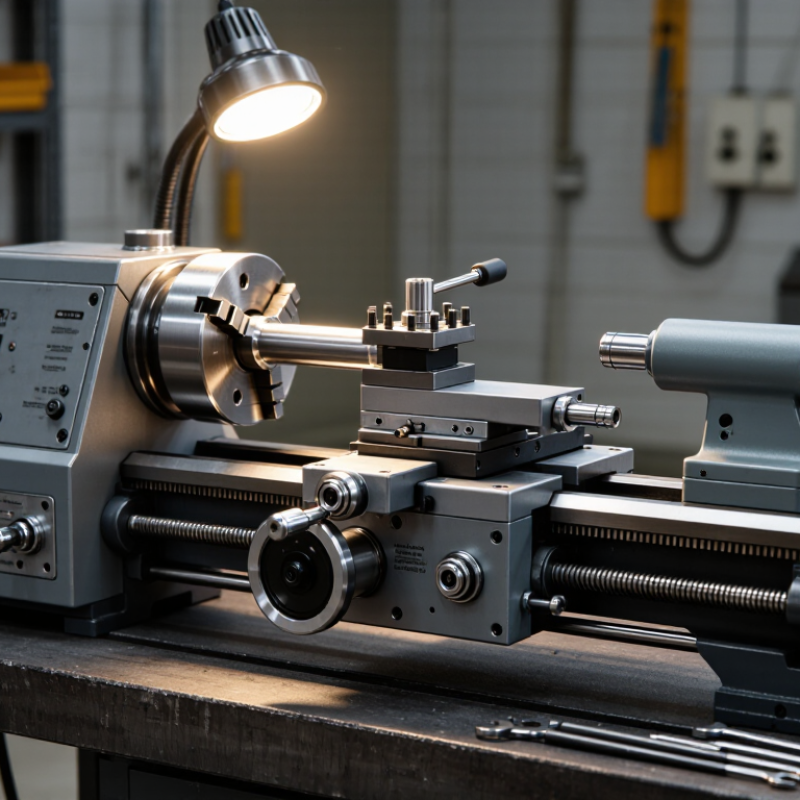
Define Your Metalworking Needs and Lathe Applications
Choosing the best bench top metal lathe begins with your work, not a product catalogue. Define the materials you will machine, such as aluminum, brass, or mild steel. Then measure the largest diameter and length required. A small model may handle instrument parts well but struggle with a 100 mm steel shaft. Check the spindle bore, swing over bed, and distance between centers carefully. I once underestimated workholding space, which caused unnecessary setup problems.
Think about the applications you perform most often. Facing and turning need stable movement and predictable speed control. Threading requires accurate leadscrew operation and a rigid carriage. Knurling demands strong support because it applies heavy pressure. For repeated steel work, prioritize bed rigidity, motor torque, and a dependable tailstock. For occasional aluminum projects, a lighter machine may be practical. Do not choose maximum specifications blindly. They can increase cost, noise, and maintenance.
Tips: List five typical projects before comparing lathes. Record their diameters, lengths, materials, and tolerances. Leave room for chuck jaws and cutting tools. Check whether replacement belts and accessories are readily available. Read operating manuals and verify safety features. A compact lathe can be capable, but only when its limits match your real applications. My own selection process would also include one test cut, because published specifications cannot reveal every vibration issue.
| Selection Dimension | Typical Requirement | Recommended Bench Top Lathe Specification | Why It Matters | Best-Fit Applications |
|---|---|---|---|---|
| Primary Workpiece | Small shafts, bushings, spacers, threaded parts, model components, and repair parts | Choose a machine designed for small-diameter work and frequent setup changes | Workpiece size and shape determine the required swing, center distance, spindle capacity, and tooling clearance | Prototype work, maintenance, education, hobby machining, and light production |
| Maximum Swing Over Bed | Diameter of the largest round workpiece that can theoretically clear the bed | 180–300 mm (7–12 in) | A larger swing provides more clearance, but it does not guarantee that the part can be machined over the carriage or cross-slide | 180–220 mm: small components 220–300 mm: larger shafts and general-purpose bench work |
| Swing Over Cross-Slide | Diameter available above the cross-slide and tool-support area | 90–190 mm (3.5–7.5 in) | This is often more practical than swing over bed when turning parts close to the carriage | Facing, turning shoulders, reducing diameters, and machining stepped shafts |
| Distance Between Centers | Maximum nominal length between the headstock and tailstock centers | 300–750 mm (12–30 in) | Longer capacity helps with shafts, but the usable length is reduced by tooling, chuck length, and tailstock setup | 300–450 mm: compact parts and bushings 450–750 mm: shafts and longer workpieces |
| Typical Workpiece Diameter | Actual diameter range for routine cutting rather than the maximum theoretical swing | 6–100 mm (0.25–4 in) | Regularly machining near the machine’s maximum capacity can reduce rigidity, finish quality, and tool life | Small mechanical components, pins, adapters, threaded rods, and bearing seats |
| Spindle Bore | Maximum diameter of bar stock that can pass through the spindle | 16–38 mm (0.63–1.50 in) | A larger bore allows long bar stock to pass through the headstock, reducing waste and improving support | Bar-fed repair work, repeated shaft production, and parts longer than the center distance |
| Spindle Speed Range | Available rotational speed for different diameters and materials | 100–2,500 rpm | Small diameters and nonferrous metals generally benefit from higher speeds; larger steel parts require lower speeds | Steel, stainless steel, aluminum, brass, plastics, and mixed-material work |
| Speed Control | Method used to change spindle speed | Variable-speed drive with a clearly marked speed display | Convenient speed adjustment improves surface finish, tool life, and operator control during setup | Frequent material changes, small-diameter turning, threading, and educational use |
| Motor Power | Available spindle power for light and moderate metal cutting | 0.75–1.5 kW (approximately 1–2 hp) | Power must be considered with spindle torque, belt or gear reduction, machine rigidity, and cutting depth | 0.75 kW: light cuts and nonferrous metals 1.1–1.5 kW: steel work and heavier interrupted cuts |
| Machine Weight and Rigidity | Resistance to vibration and deflection during cutting | 90–350 kg (198–772 lb) | Heavier cast-iron construction generally improves stability, finish, and repeatability, especially in steel | Light machines: portability and small parts Heavy machines: deeper cuts, threading, and improved surface finish |
| Bed Construction | Support structure for the carriage and tailstock | Rigid cast-iron bed with a hardened or precision-finished guideway | A stable bed helps maintain alignment between the spindle, carriage, and tailstock over time | General-purpose turning, precision repair work, and repeated setups |
| Tool Post | Method for holding and changing cutting tools | Quick-change tool post compatible with standard bench-lathe holders | Fast, repeatable tool changes reduce setup time and help maintain consistent tool height | External turning, facing, boring, chamfering, and parting operations |
| Threading Capability | Internal and external thread production | Change gears or a gearbox covering common metric and inch pitches | Thread range and lead-screw configuration determine which threads can be cut without additional hardware | Fasteners, adapters, repair parts, instrument components, and custom fittings |
| Thread Pitch Range | Common thread sizes required for the intended work | Metric: approximately 0.5–3.0 mm Inch: approximately 8–48 TPI |
A wider range reduces the need for separate tooling or replacement gear sets | Metric workshop projects, inch-based repair work, and mixed-standard maintenance |
| Tailstock Features | Support for drills, reamers, centers, and long workpieces | Quill travel of about 50–100 mm with a commonly available Morse taper | A useful tailstock improves axial drilling accuracy and supports long work between centers | Center drilling, boring, reaming, drilling, and shaft support |
| Chuck Size | Workholding capacity and jaw clearance | 100–160 mm (4–6.3 in), three-jaw chuck | A three-jaw chuck provides quick concentric holding; a four-jaw independent chuck offers greater adjustment | Three-jaw: routine round or hexagonal stock Four-jaw: square, irregular, or precision-aligned work |
| Accuracy Target | Required dimensional control for the finished part | General work: approximately ±0.05 mm Precision work: approximately ±0.01–0.02 mm with careful setup |
Achievable accuracy depends on machine condition, thermal stability, tooling, measurement method, and operator technique | General fabrication, repair parts, bearing fits, instrument components, and prototypes |
| Materials to Machine | Material hardness, machinability, and thermal behavior | Select tooling and rigidity for the hardest material in the planned workload | Aluminum and brass typically require different speeds and tool geometry than steel or stainless steel | Aluminum, brass, mild steel, stainless steel, engineering plastics, and free-cutting alloys |
| Electrical Supply | Available workshop power and installation requirements | Single-phase supply, commonly 110–120 V or 220–240 V | Electrical compatibility affects installation cost, motor selection, overload protection, and workshop safety | Home workshops, schools, maintenance rooms, laboratories, and small fabrication areas |
| Workspace Requirements | Floor or bench area, access, lighting, and chip management | Provide a rigid, level bench; allow access around the machine and room for stock storage | Restricted access can make chuck changes, tailstock adjustment, cleaning, and emergency stops difficult | Compact workshops, training rooms, garages, maintenance departments, and laboratories |
| Best Overall Choice | A balanced machine for varied bench-top metalworking | 180–250 mm swing, 400–600 mm center distance, 20–32 mm spindle bore, 0.75–1.5 kW motor, variable speed, and metric/inch threading | This combination covers a broad range of small shafts, bushings, threaded parts, prototypes, and repair components without excessive size | General-purpose users who need flexibility more than maximum production capacity |
| Practical selection rule: choose the lathe according to the largest workpiece you will machine regularly, not the largest part it can hold once. Confirm the machine’s stated capacities, electrical requirements, safety features, tooling compatibility, and accuracy under actual cutting conditions before purchase. | ||||
Related Posts
-
What Are the Top 10 Bench Top Metal Lathes?
-
What is a Bench Top Metal Lathe and How to Choose One?
-
Best Bench Top Metal Lathe for Global Buyers in 2026?
-

Why Choose a Turret Milling Machine for Your Machining Needs?
-
China Top 10 Brake Drum Disc Lathe Machine Manufacturers
-

China Best Valve Seat Boring Machine for Global Buyers?