
How to Choose the Right Vertical Lathe?
Choosing a Vertical Lathe is not simply a matter of selecting the largest swing or highest spindle power. It means matching the machine to the parts, materials, tolerances, and production rhythm your shop actually handles. A model that looks impressive on a specification sheet may prove awkward for daily loading, tool access, or setup. Those details matter.
Start with the workpiece: its diameter, height, weight, and clamping requirements. Then consider cutting forces, required accuracy, and whether jobs are repeatable or frequently changed. Check table capacity, spindle speed range, tool stations, control features, chip removal, and available floor space. These are practical questions, not brochure details. Also review service access, operator training, spare-part availability, and the supplier’s record of support. A lower purchase price can become costly if downtime or difficult maintenance interrupts production.
The right choice depends on your priorities. A job shop may value flexibility, while a dedicated production line may favor consistent cycle times and automation. Compare real parts and representative operations, not just machine labels. Ask suppliers for demonstrations or test cuts when possible, and confirm what the quoted configuration includes. Specifications can mislead. No checklist replaces a careful review of actual needs; I would revisit assumptions before committing, especially when future work remains uncertain.
Understanding the Purpose and Operating Principles of a Vertical Lathe
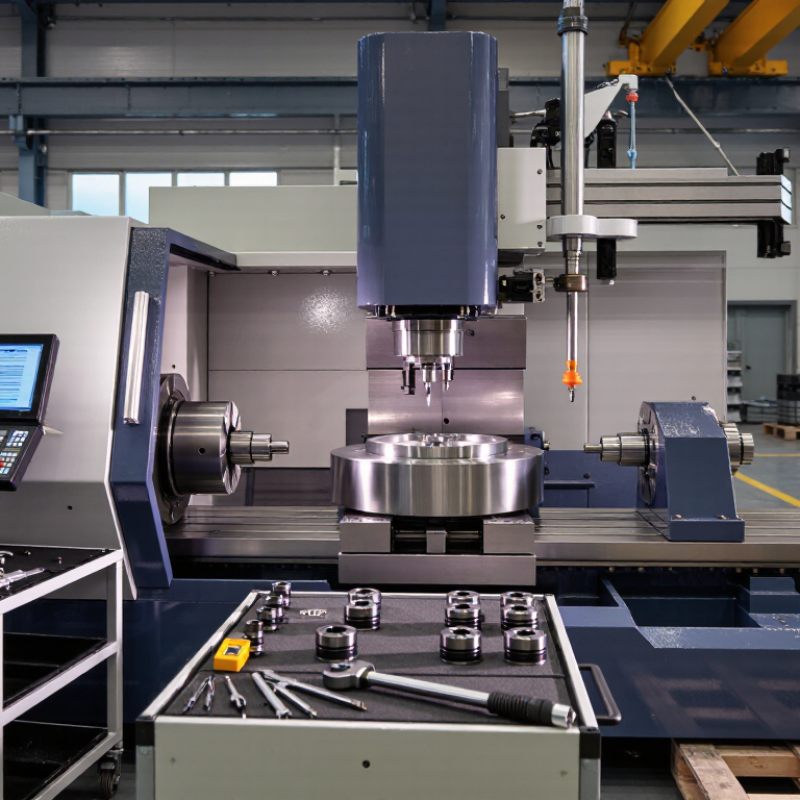
A vertical lathe holds a workpiece on a horizontal rotary table. The table turns the part around a vertical axis while cutting tools move across its face and diameter. This setup suits broad, heavy components such as rings and wheel hubs, because gravity helps seat them on the table. There is a catch. Poor centering or clamping can still cause vibration, uneven cuts, and tool wear.
Choose capacity using the actual part and fixture, not the machine’s advertised swing alone. Check table load, workpiece height, spindle torque at low speed, tool travel, and chip removal. Vertical lathes often suit short, wide parts; long shafts may fit a horizontal lathe better. The International Federation of Robotics’ World Robotics 2024 report counted 4,281,585 industrial robots in operation worldwide in 2023. That is a factory-wide figure, not a count of automated lathes, but it makes loading methods and control-system integration worth checking.
Tips: Request a test cut with your material and a representative fixture. Watch chip flow and clamping access, then check dimensions after warm-up. A neat specification sheet cannot replace a real setup trial.
How to Choose the Right Vertical Lathe? - Understanding the Purpose and Operating Principles of a Vertical Lathe
Use this guide to match a vertical lathe to the workpiece, machining tasks, and production requirements. Capacity figures are illustrative; verify the machine’s specifications and workholding limits before selection.
| Selection Factor | What to Consider | How It Affects the Choice | Illustrative Example |
|---|---|---|---|
| Operating principle | The workpiece is clamped to a horizontal rotating table. Cutting tools move across the face and diameter, with the ram commonly providing vertical tool movement. | Choose a vertical arrangement when parts are wide, heavy, or relatively short and can be supported securely on the table. Confirm that the machine’s axes and tooling support the required cuts. | Facing and turning a large circular housing while it is held flat on the table. |
| Workpiece dimensions | Maximum turning diameter, workpiece height, and clearance for fixtures and tools. | Select capacity with allowance for clamping, tool access, and safe loading. A part that fits the table diameter may still exceed the machine’s turning or height limits. | A part 1,200 mm in diameter requires a machine with sufficient turning diameter and setup clearance. |
| Workpiece weight | Part mass, center of gravity, clamping method, and the machine’s permitted table load. | Check both the stated table-load limit and the load distribution requirements. Use suitable lifting and workholding plans for heavy or uneven parts. | A 3,000 kg casting must be within the machine’s rated load and safely supported on the table. |
| Required operations | Facing, external or internal turning, grooving, boring, drilling, or milling. | Specify the complete process plan. Tool stations, live tooling, spindle or table features, and available axes vary by machine configuration. | A flange requiring face turning and bolt-hole drilling may benefit from suitable drilling capability or an additional machining operation. |
| Material and cutting load | Material hardness, abrasiveness, chip formation, and the amount of material to remove. | Match machine rigidity, drive power, torque, tooling, and cutting parameters to the material and intended cuts. Do not use spindle power alone to judge capability. | Rough-turning a large steel casting generally places different demands on the machine than finishing a softer alloy part. |
| Accuracy and finish | Dimensional tolerances, surface-finish requirements, repeatability, and measurement method. | Review the machine’s accuracy specifications, thermal conditions, workholding rigidity, tool system, and inspection plan. Actual results depend on the full process. | A precision sealing face may require a controlled finishing pass and in-process or post-process measurement. |
| Manual or CNC control | Part complexity, repeat volume, operator skill, and the need for coordinated or repeatable tool paths. | A manual machine may suit straightforward, low-volume work. CNC control can improve repeatability and support programmed cycles for recurring or complex jobs. | Repeated production of the same circular component may benefit from a stored CNC program. |
| Production volume and changeovers | Batch size, setup frequency, loading time, and the number of different part families. | Consider fixture changes, tool capacity, program setup, and loading arrangements alongside cutting time when estimating productivity. | Frequent small batches may favor flexible workholding and quick setup over maximum automation. |
| Installation and service | Floor space, foundation, power supply, lifting access, coolant handling, and maintenance access. | Confirm site requirements with the machine specification and plan for installation, operator access, chip removal, and routine service. | A large vertical lathe may require a prepared foundation and adequate overhead lifting capacity. |
Related Posts
-
Top Vertical Lathe Manufacturers and Suppliers Worldwide
-

2025 Top Vertical Lathe Trends: What to Expect in the Industry
-

Best Vertical Lathe Machines for Global Buyers in China?
-
2026 Best Metal Bandsaw Reviews and Buying Guide What to Look For?
-
2026 Best Ck6150 CNC Lathe for Global Buyers Insights?
-
Top Quality Sheet Metal Shearing Machines for Global Buyers?