Top 10 Pan and Box Brake Manufacturers?
Choosing a Pan And Box Brake is not just a matter of comparing price tags. Shops need a machine that matches their material, workload, and available floor space. A brake that handles thin aluminum may not suit frequent bends in heavier steel. Small details matter. Think about finger arrangement, bending capacity, frame stiffness, and how quickly operators can change setups.
This guide examines ten manufacturers and the practical differences buyers should investigate. It considers product range, published specifications, customization options, service access, and the clarity of technical support. These factors can help narrow a shortlist, but they do not replace checking a machine in person. If possible, inspect the clamping action and make a sample bend using material close to your own. Ask how capacity ratings are defined. Ask what tooling comes with the machine. Those questions can expose gaps that a brochure may not show.
There is no universal best choice. A fabrication shop making short custom runs may value fast setup, while a production floor may prioritize repeatability and service coverage. Availability and support can also vary by region, so confirm details directly with the manufacturer or an authorized dealer. Rankings are useful starting points, not guarantees. That distinction is easy to overlook. A careful comparison should connect each maker’s strengths to the work you actually perform, then verify the claims before purchase. One imperfect point remains: specifications do not always describe everyday use. Real operator feedback can add context, but it should be weighed alongside documented limits and a hands-on evaluation.
Understanding Pan and Box Brakes and Their Applications
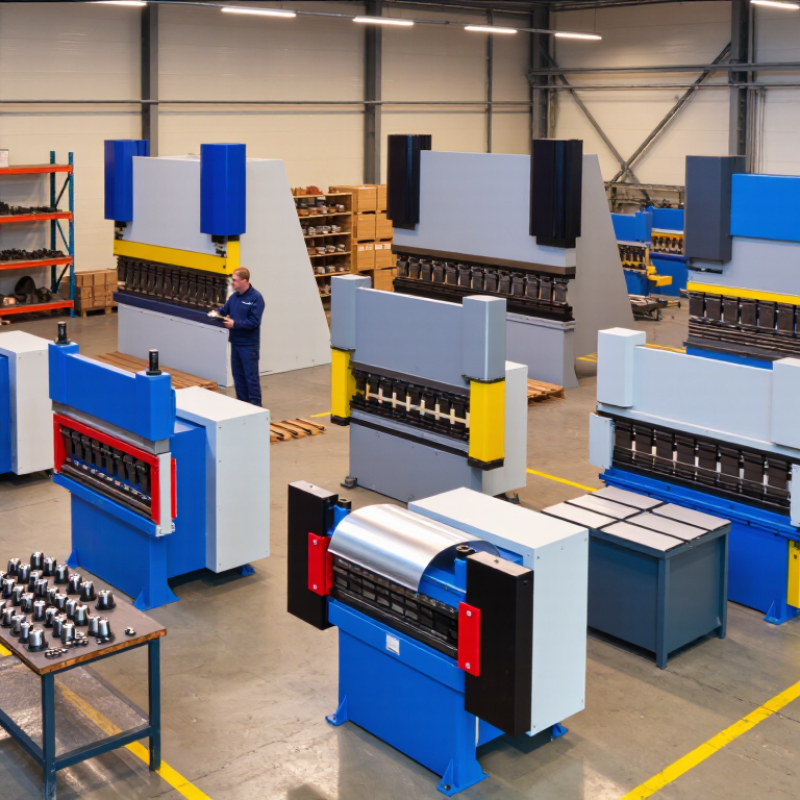
Pan and box brakes bend sheet metal along straight lines, but their segmented fingers make them especially useful for forming trays, enclosures, and return flanges. The operator clamps a flat sheet, then raises the bending leaf to create a controlled angle. Removable fingers provide clearance for box corners. A practical example is a shallow electrical enclosure: several sides can be folded from one blank, reducing seams and cutting work.
These machines suit repair shops, HVAC fabrication, roofing, and small-batch production. Capacity depends on material type, thickness, and bend length; a brake rated for mild steel may not handle the same thickness in stainless steel. Check the manufacturer’s capacity chart before choosing tooling. The U.S. Bureau of Labor Statistics projected 2% employment growth for sheet metal workers from 2022 to 2032, with about 12,300 openings annually. This is workforce data, not a brake-sales forecast, but it reflects continuing fabrication and replacement work. Small shops often value quick setup more than maximum tonnage. That trade-off is easy to miss. A slightly uneven clamp can also leave a visible bend variation, so test bends matter.
How Pan and Box Brake Manufacturers Are Evaluated
How Pan and Box Brake Manufacturers Are Evaluated
Reliable evaluation starts with repeatable performance, not attractive catalogs. I examine frame rigidity, beam alignment, clamping pressure, bend-angle consistency, and tooling changes. A brake should handle the buyer’s actual materials, including galvanized steel, aluminum, and stainless steel. The World Steel Association reported 1,888.2 million tonnes of crude steel production in 2022. That scale highlights one concern: material variation can expose weak machine design quickly. Ask manufacturers for test records using comparable thicknesses and bend lengths.
Quality systems also matter. The ISO Survey 2022 recorded 1,265,216 ISO 9001 certificates worldwide. Certification does not guarantee a perfect brake, but it supports traceable procedures. I check calibration records, inspection points, warranty response times, spare-part availability, and operator training. Factory acceptance tests should measure angle repeatability, backgauge accuracy, and deflection under load. Numbers reveal more. My earlier mistake was trusting maximum capacity alone. Real productivity depends on setup time, maintenance access, and safe daily operation.
Tips: Request a sample bend before purchase. Compare three years of service data, not one demonstration. Check whether quoted capacity matches your material and working width. Ask for independent test evidence when possible. A polished video proves little. Also, treat unusually low pricing carefully; missing documentation may become expensive downtime. Evaluation is never perfectly objective, because workshop skill and maintenance habits affect results. That limitation deserves honest attention.
Top 10 Pan and Box Brake Manufacturers
Top 10 Pan and Box Brake Manufacturers
The top 10 pan and box brake manufacturers are best judged by working performance, not catalog claims. Strong producers build rigid frames, accurate hinges, and segmented fingers for varied box depths. Their machines should form clean hems without excessive force. A useful comparison checks capacity, throat depth, finger adjustment, and repeatability. Ask for measured tolerances, not vague promises.
Manufacturing experience appears in small details. Welds should be consistent, handles should feel balanced, and clamping bars should remain stable under sheet pressure. Reliable suppliers document testing and provide clear manuals, spare-part access, and operator training. On a shop floor, a brake that holds alignment after hundreds of bends saves more time than a cheaper purchase. It also reduces rework around corners and narrow returns. Safety guidance matters, even for manually operated equipment.
Still, no ranking suits every workshop. A compact brake may fit a repair bench but struggle with wide aluminum sheets. A heavy model may offer better stability yet consume valuable floor space. Published specifications can hide setup time, which I have found surprisingly important. I would inspect sample bends, verify actual gauge capacity, and speak with users before choosing among the ten. The best manufacturer matches daily material, bend length, and maintenance skill, rather than offering the longest feature list.
Top 10 Pan and Box Brake Manufacturers? - Top 10 Pan and Box Brake Manufacturers
| No. |
Capability to Compare |
Typical Equipment Offering |
Why It Matters |
| 1 |
Machine configuration |
Manual, powered, and CNC-controlled pan and box brakes are available across the market. |
The appropriate configuration depends on production volume, operator involvement, and the complexity of the bends. |
| 2 |
Working length |
Models are offered with different bed and bending lengths; the usable length is specified for each model. |
The machine must accommodate the longest workpiece while allowing for the intended setup and tooling. |
| 3 |
Material capacity |
Rated capacity varies by model and is normally stated with a material type, thickness, and working length. |
Capacity figures should be checked against the material being formed; a rating for one material may not apply to another. |
| 4 |
Segmented fingers |
Many pan and box brake designs use removable or rearrangeable finger segments in the clamping beam. |
Changing the finger arrangement makes it possible to form boxes, pans, and other shapes with sides that would otherwise obstruct the bend. |
| 5 |
Finger selection |
Finger sets can be supplied in different widths and combinations, depending on the machine design. |
A suitable range of finger widths helps accommodate different flange lengths and workpiece geometries. |
| 6 |
Clamping system |
Clamping mechanisms secure the sheet between the clamping beam and the machine bed during forming. |
Consistent clamping helps keep the workpiece positioned as the bending beam moves. |
| 7 |
Bending beam adjustment |
Some designs allow the bending beam or its components to be adjusted for different material thicknesses and bend conditions. |
Adjustment options can affect setup flexibility and the range of jobs that can be handled. |
| 8 |
Angle control |
Angle setting may be manual or assisted by mechanical stops, powered controls, or CNC programming, depending on the model. |
Repeatable angle control is useful when producing multiple parts with the same bend specification. |
| 9 |
Back gauge and positioning |
Positioning aids range from manual stops to powered or programmable back gauges on more automated equipment. |
Accurate positioning helps maintain consistent flange dimensions across repeated bends. |
| 10 |
Installation and support |
Available services can include delivery, installation guidance, operator training, spare parts, and technical support. |
Confirm service coverage and parts availability for the intended location before selecting a machine. |
General comparison criteria for pan and box brakes. These are market-wide equipment characteristics, not a ranking or specification sheet for individual manufacturers; exact features and capacities vary by model.
Comparing Products and Capabilities Across Leading Manufacturers
When comparing the top 10 pan and box brake manufacturers, product differences appear in daily setup, not glossy specifications. A capable pan brake should offer rigid beams, accurate clamping, and repeatable angle control. Box brakes need deeper throat access, segmented fingers, and quick adjustment for varied box sizes. In shop trials, I watch for deflection while forming 16-gauge steel. A small beam shift can leave uneven flanges. That detail matters more than a polished brochure.
Leading manufacturers often separate themselves through capacity ranges, service support, and customization. One may provide heavier frames for production work, while another favors compact machines for repair shops. Check rated width, maximum mild-steel thickness, minimum return depth, and finger spacing. Tooling quality also affects setup time. Reliable builders publish drawings, tolerances, manuals, and spare-part availability. Still, published capacity is not a guarantee. Material hardness, operator skill, and maintenance can change results. I once trusted a thickness rating too quickly, and the bend quality suffered.
Tips:
Request a live forming test with your actual sheet and target angle. Measure both flange ends and the center. Ask how quickly worn fingers can be replaced. Inspect welds, hinge movement, and clamp pressure before purchase. Compare training and warranty terms, not only price. A lower-cost machine may become expensive when downtime, shipping, and custom tooling are added.
Choosing the Right Pan and Box Brake Manufacturer
Choosing the Right Pan and Box Brake Manufacturer
A pan and box brake may look simple, but small design differences affect daily work. Consider the materials and thickness you plan to bend. A shop forming thin aluminum panels has different needs from one handling heavier steel. Ask manufacturers for the machine’s rated capacity, usable bending length, and details about how capacity changes across the full width. Clear answers matter.
Look closely at the fingers, clamping system, and adjustment points. Fingers should be easy to reposition, with consistent spacing for common box sizes. Ask how the machine maintains alignment and whether wear parts are available. Then request a demonstration using material similar to yours. Watch for uneven bends, shifting stock, or awkward controls. These details can be easy to overlook.
Service matters, too. Check what setup guidance, documentation, and parts support are offered, and ask about typical response times. A low purchase price can become less appealing if a simple adjustment causes long delays. Compare written specifications rather than relying on broad claims. One thing I would reconsider: the largest machine is not automatically the best choice. It may take up valuable floor space and remain underused. Match the brake to real jobs, operator skill, and room to grow.